Category Archives: Books

Red Harvest Moon (The Wandering Knife Book 1) by Miles Hurt

Assault on Precinct 13 (1976) is one of my very favourite John Carpenter movies. I’d probably rank it slightly higher than Halloween (don’t @ me), mainly because I’m an action film fan. Made on a low budget, AoP13 packed a lot of thrills and set-pieces in its lean running time. It was set in a confined space and over a few hours. I loved the format and tightness of the screenplay (a feature of much of Carpenter’s early work), that still gave time for some decent character scenes.

All of which brings me to the book I’m reviewing here. Red Harvest Moon is the opening volume of a debut epic fantasy series, The Wandering Knife, by author Miles Hurt. Heavily influenced by Japanese folklore, Hurt’s main character is Ren. He was once a Loyal Knife, swearing allegience to king and country, until a rash decision almost cost him his life, but which instead resulted in his exile. He became The Wandering Knife, travelling the length and breadth of the land, with his companion and friend Crimp, robbing people and villages to keep his head above water. He’s not about making friends; he’s more about staying alive.

The book begins with the pair of brigands coming up on two more men who they see as easy prey. It turns out that the men have barely survived an attack by a race of human-like creatures called ghuls. These monsters hail from far-off Urizan and are sworn enemies of the people of Soren. They have been quiet for a long time, but are now deep into Ren’s territory and are terrorising innocent villages. They are led by Krond, whose blood is a mix of human and ghul, and is practically unstoppable. Ren and Crimp eventually aid the two men in fighting off Krond and his ghuls, but one of the men is killed. The survivor, Drunn, pleads with Ren and Crimp to help him warn the villagers of Puttle that death is on its way. Krond is left maimed after Ren’s innate ability with the sword takes an eye–he swears revenge on our Wandering Knife.

All this happens in the first couple of chapters, and makes the remaining narrative compelling action-packed. Any fan of epic fantasy will be familiar with how the first book of any series will take its time to introduce characters, settings, and conflicts. Often there are chapters where nothing much happens at all; just a lot of travelling and talking, mainly. I’m not saying there’s anything wrong with this: my favourite fantasy series of all time, Stephen Donaldson’s The Chronicles of Thomas Covenant, devotes whole sections of its ten volumes to characters walking and telling each other stories. But it’s a breath of fresh air that Miles Hurt doesn’t go down this route just yet. His judicious use of brief flashbacks and character dynamics more than set the scene in Red Harvest Moon.

Miles Hurt

Basically what we have here is a siege novel, which is what reminded me of Carpenter’s movie. The action takes plain primarily in Puttle and its surroundings, with Ren, Crimp, and Drunn trying to convince the villagers and its reeve that their lives are in danger if they don’t up sticks and desert their homes. Not everyone wants to leave: it’s Harvest time and the village are preparing a feast, and some don’t trust Ren and Crimp (Drunn has history with the village, so his support is also untrustworthy). The men have a job on their hands to keep themselves and the villagers alive. Ren and Crimp also debate whether or not they should cut and run. For a fantasy novel, the stakes are lowkey, concentrated as they are on the village and the people that live there. Over the course of this book, Miles Hurt introduces us to characters that, should they survive their encounter with evil, open up the land of Soren and beyond for future novels in the series.

The nomadic hero and his companions are features of Japanese folklore, bringing to mind the legends of the samurai. Here we have not seven, but three “samurai”. I look forward to seeing this team expand as the series goes on. Some will live; others won’t. It’s the nature of the Great Circle, as Ren learns from his father: “Though you are a Wandering Knife, you still walk within the Great Circle. Find purpose in that.” Purpose, indeed.

Bottom line: this is a great start to what I think will be a series to look out for, and Miles Hurt is definitely an author to follow.

The Magdalene Deception by Gary McAvoy

One of the greatest pleasures of my life was a trip to Rome with a dear friend in October 2012. (Remember being able to travel to different countries? Oh the joy! How we all miss right now what we used to take for granted!) My travelling companion and I managed to take a free tour of the Vatican while we were there. It was breath-taking, awe-inspiring, and full of tourists like ourselves. The Sistine Chapel has to be seen with human eyes to be fully appreciated. And of course, being an Irishman, Catholicism will be forever ingrained in my ethos despite it being a bad smell I’d like to get rid of. But still — the Vatican: just wow!

The Magdalene Deception is the first in a series of books called The Magdalene Chronicles, and it is written by Gary McAvoy, a military veteran, a tech entrepreneur, and a dealer in rare manuscripts, with all of these hats vying for attention in his debut fiction novel. And for the most part, he juggles these balls successfully.

Michael Dominic is a Jesuit priest: young, brash, handsome, and loyal to his father figure, the Brazilian cardinal Enrico Petrini. His calling to the Church is more out of a sense of said loyalty than spiritual devotion, but it does provide him with an outlet for his other passion. Father Dominic is a medievalist, and he has secured a great position within the Vatican, working as an archivist in its massive library, He could spend all the years of his life poring over the literally millions of documents from centuries past and he would still not see them all. But chance gives him his first encounter with the many secrets the Vatican hides and indeed controls.

Many of us will be familiar with Dan Brown’s megasellers The DaVinci Code and Angels and Demons. If you’ve not read the books, it’s probable you’ve seen the movies adapted from them. They’re potboilers and not meant to be taken seriously despite them fueling a ton of conspiracy theories over the last couple of decades. They’re fun reads, and that’s that. The Magdalene Deception trods a similar path, in that there is alleged evidenciary proof of a document that threatens to turn the Catholic Church and its followers into a tailspin of denial shock. The Jesuit priest stumbles on this document by accident and this sets off a chain of events that force the novel’s main antagonist, the Vatican’s Secretary of State Cardinal Dante, to use whatever means possible to suppress the investigation.

Running alongside the main plot is yet another investigation, this time concerning Hana Sinclair, a journalist who’s looking into the connection between Nazi plundered gold and a shadow group who help return this fortune to those it was taken from. Her contacts include the president of France, her grandfather, and Father Dominic’s mentor, Cardinal Petrini. The role of wartime pope, Pius XII, is examined and criticised for his alleged inactions during the Nazi occupation of Europe and the subsequent Holocaust. The involvement of the Croatian far-right militia, the Ustasha, echoes into the novel’s plot, too, and the powers-that-be in the Vatican have their hands dirty with them. There is a lot going in here.

Gary McAvoy

Father Dominic and Hana join forces when it becomes plain to both that their individual investigations have a common purpose. While I always enjoy conspiracy theories in fictional form, I was drawn to Hana’s plotline more. It led me down a rabbit hole of espionage and subterfuge that fascinated me. I liked how Gary McAvoy worked historical figures into a fictional novel. I love when writers do this.

McAvoy also impressed me with his historical research. The novel is peppered with facts and figures, and it is all the better for it. What is lacks, however, is a sense of danger for the main characters. Yes, the matters at hand are urgent and so much is at stake, but I never anxious for the priest and the journalist., regardless of the danger they put themselves in. I was more worried for the supporting characters, especially Hana’s cousin, Karl the Swiss Guard, and Cardinal Petrini. (Note: Swiss Guards are well-trained bad-asses–every state should have their own, not just the Vatican City.) But there is genuine intrigue. I did want to know what was going to happen to the document at the end, and I was reasonably satisfied with the novel’s denouement. This is a plus for me, because I want to read the next book, The Magdalene Reliquary. I want to see what McAvoy comes up with next. Both books are available for those with a Kindle Unlimited account, and you’ll read them and be entertained and educated for a few days. You can’t ask better than that.

Her Last Holiday by C.L. Taylor

Picture a time in your life, if you would. You’re thisclose to a nervous breakdown, and your family is as helpful as a court summons — they’re the root cause of all your problems anyway. What are you to do? You’re going to need help, right? A little counselling will go a long way, but you just need to find the right people to guide you. So the internet becomes your friend, and very soon you’ve signed up to a few days in the sun with like-minded messed-up individuals, ready to throw caution to the wind and your worries into the sea. Sounds ideal, doesn’t it? Well, it would be, if you didn’t end up missing, presumed dead, with your life coach in prison for negligent homicide. This is what happened to Jenna Fitzgerald.

Jenna joins a group called ShrinkSoul, a self-help organisation run by Tom Wade and his wife Kate. They’re a kind of internet sensation who supposedly help people in crisis to attain better control over themselves and their lives. Tom oozes charisma and is the handsome face of ShrinkSoul. Kate runs the business and micro-manages her husband every step of the way. Jenna is attracted to what they have to offer, as well has being drawn to Tom in other ways. Her Last Holiday, the latest psychological thriller from bestselling author C.L. Taylor (The Fear, Sleep, Strangers), is a fast-moving, page-turning read that examines, amidst the confusion and drama, how domestic violence, whether physical, verbal, or both, turns lives upside down and make the most confident person in the room tremble at the very mention of ‘family’.

The story begins with Tom being released from a two-year stretch behind bars due to the accidental deaths of two people at a retreat on the Mediterranean island of Gozo, off the coast of Malta. Jenna went missing, and the coroner confirmed that she more than likely took her own life. No one was ever charged with her disappearance. Kate, meanwhile, has had to start from scratch, but she sees an opportunity to take advantage of Tom’s release and pretty soon they’re both back in the self-help business. Jenna’s sister Fran is sent by her mother Geraldine to investigate the new organisation, and tasked with finding out exactly what happened to Jenna. She’s been booked to participate in a retreat in Wales.

Her Last Holiday is told in three distinct points of view. Fran is the leading character and we learn a lot about her and her relationships with Jenna and her family as we go along. Jenna’s voice comes from just before her disappearance; we meet her as she and her fellow travellers-in-life land in Malta. Kate is the last PoV. Her story is complex, and we see her working through her post-trial anxiety, welcoming her husband back home, and then immediately kickstarting the organisation once more. Her story within Her Last Holiday is, for me, the one I found the most engrossing. Overall, though, the different perspectives and changes of tense worked throughout.

C.L. Taylor (Image c/o The Scotsman)

The twists (for there are always twists), when they come, are earned. Some you’ll see coming; others you won’t. But my favourite parts of the book were the one-to-one therapy sessions. Despite lying about herself to get there, Fran opens up to Tom about her life, and we learn about the dominant and oftentimes abusive figure of her and Jenna’s mother Geraldine. The supporting characters are decently fleshed out, and more than a few of them are relevant to the plot. I enjoyed reading about Phoenix, Joy, Renata, and Damian. If I take one thing from reading C.L. Taylor’s book, it’s that while we’re all a little messed up, we are so mainly because of family.

I received a free copy of Her Last Holiday from NetGalley and the publishers, in return for an honest review.

Passion Play by Claire O’Dell

Therez Zhalina has lived a very sheltered life in Melnek. She is the daughter of a ambitious merchant who, unfortunately for the 15-year-old girl, has big plans for the family and business, whether Thereze likes it or not. And she doesn’t. Following a formal dinner, where Therez is introduced to Melnek society, the young girl is devastated to find out that her father has arranged her to be married to a cool and cruel man, Theodr Galt. Therez has dreams of her own. She wishes to travel to Duenne and attend university there. Basically, she wants to see the world. Her father’s plans would set her on a path on which she would have no control over her life. So she decides to leave without saying a word.

Taking what money she’s saved, she ends up gaining carriage out of Melnek with a caravan owner and his cohort of unsavoury fellow travellers. This is where things take a dark turn in Thereze’s young life. Most of her possessions have been stolen from her, and in order to stay on her journey she is forced to trade with the only thing she has left: her body. In a series of gruelling scenes, for the reader as well as Therez, the girl makes a choice to give up her body and innocence to her rapists — for that is what they are, regardless of the choice Therez makes. She is but a child, but now she’s little more than a sex slave. I found these sections of the story very hard to read.

When Therez eventually makes her escape, she ends up at a pleasure house run by Lord Raul Kosenmark, a duke who was once an advisor for the king. He, too, ran away from his responsibilities. Therez changes her name to Ilse, and is referred to this new name for the rest of the book. Raul offers her a position in his household once she’s physically well, and Ilse begins to form new friendships in the kitchen. Raul sees potential in her and so takes her on as his secretary. It is from this position that Ilse learns of what is going on in the world around her. There is more than politics at play here. There is magic everywhere, with some people being more gifted than others. There are plots, and there’s a war brewing. In the midst of all this, there is a sacred jewel that has gone missing, one that holds the key to power.

A number of things intrigue me about Passion Play. Author Claire O’Dell, whose work I’ve reviewed here before, has created a world that is not unlike Eastern Europe, with names and a magical language that almost Germanic. If I could posit a theory, the politics at play here are similar to what led to the outbreak of WWI. I could be wrong, but that’s how I read it. The countries that surround Ilse and Raul each have their own border controls and internal politics. Throw a sinister magician into the mix, and you have the spark for major bloodshed. The other volumes in the series will no doubt explore these complexities in greater detail. In Passion Play we’re given what information we need to know at this juncture. The system of magic has at its core, I do believe, a knowledge that one has lived a previous life. Reincarnation rears its head once more. I find this very fascinating.

Claire O’Dell

I was impressed by the level of detail O’Dell put into her world-building. I’m a sucker for detail, and the author does not disappoint. Her supporting characters have good background stories and I have no doubt that characters we see in passing will pop up again in later books. I enjoyed this book, and while some readers will understandably balk at the level of sexual violence at the start, there is a pay-off towards the end. When Passion Play ends, neither Ilse nor Raul are the same people when we first meet them. They’ve both endured tragedy and loss of familial connection. Where this takes them, we will have to find out for ourselves in the next book, Queen’s Hunt.

The Reincarnationist Papers by D. Eric Maikranz

In July of last year million of us around the globe sat down to watch the latest hit movie to come from Netflix. The Old Guard starred Charlize Theron as Andromache (Andy) of Scythia, one of a group of near immortal beings, masquerading among us mere humans as soldiers of fortune, mercenaries travelling the globe taking on causes to help humanity. It was as action-packed as it was thought-provoking, drawing on the myth, and sometimes the hope, that gods live alongside us.

In 2009, author D. Eric Maikranz self-published his debut novel, The Reincarnationist Papers, urging his readers to act as agents and promote his book to Hollywood movie producers. Fast forward to this year, 2021, Infinite, directed by Antoine Fuqua and starring Mark Wahlberg, based on Maikranz’s novel, is scheduled for release in September. I’m really looking forward to the forthcoming adaptation, because this book is really good.

Like The Old Guard, The Reincarnationist Papers tells the story of a group of people who live forever. Unlike the heroes of Theron’s movie, the characters in Maikranz’s book age and die naturally. Some die by other means, but in the main, when their bodies die, their souls are reincarnated into another newborn body. The concept behind this is, I think, we all reincarnate but only a very, very small number of us remember our previous lives. This is what happens to the main character, Evan Michaels, who from an early age can recall two previous lives: a Bulgarian who fought in World War I; and a young boy from Georgia in the United States who died in a fire. Needless to say, these memories mess him up and when we meet Evan, he’s a professional arsonist, making money from people defrauding insurance companies, and contemplating suicide. When a job threatens to go south on him, he’s rescued by Poppy, a mysterious woman who lives with her servant in an abandoned church. She nurses Evan back to health and tells him a story he doesn’t quite understand but nevertheless is close to believing.

D. Eric Maikranz

Poppy is one of an elite group of 27 people who can remember their previous lives. She is convinced that Evan is another reincarnated soul, but he must meet the other members and prove his worthiness through a trial known as Ascension. The book then takes Evan and the reader on a journey through time and memory. Maikranz backs up his main story with plenty of thought-provoking and philosophical discussion about life without death. I found these sections fascinating and important to the story as a whole. Peppered throughout are narratives about Evan’s and Poppy’s previous lives. We learn more about most of the other members of the Cognomina (the name they give themselves), who meet up in Zurich every year on Midsummer’s Day. They are rich beyond comprension and Evan wants –needs — to be part of this family.

My favourite characters are Samas, an art collector who has his own agenda for Evan; and Poppy herself, who is mercurial and not altogether trustworthy. These beings, despite being long-lived, have human needs and traits, and each of them has a backstory that could fill another book or two in this series. Maikranz has a second book coming out in the near future, too, thank goodness: Evan and his new family practically demand it.

Also available from the author is a free-to-read origin prequel, which serves as an interesting prologue to the main book. I recommend you read this first, though it’s not a prequisite. D. Eric Maikranz has written a little beauty here, full of great characters and excellent story-telling. If you have the slightest interest in life and rebirth, I don’t hesitate in asking you to read The Reincarnationist Papers. Don’t wait for the movie.

Remote Control by Nnedi Okorafor

A book that has stayed with me years after I read it is called Who Fears Death. Published in 2010, it was written by Nnedi Okorafor, a multiple award-winning author born in the United States to Igbo Nigerian parents. It’s an amazing work of what she describes as Africanfuturism. In an essay Dr Okorafor penned in 2019, she defined the term as a sub-category of science-fiction that is “rooted in African culture, history, mythology, and point of view that does not centre on the West or Western privilege.” It is an essay worth reading in its entirety, because it offers a unique and profound insight into the works of this brilliant author, who not only writes for adults, but for younger readers, too.

Remote Control, by Nnedi Okorafor (Image: tinhouse.com)

Who Fears Death is set in post-apocalyptic Sudan. Dr Okorafor’s Binti trilogy has as its main character a girl who’s part of Himba ethnic group in Namibia. In Remote Control, Fatima is Ghanaian. She lives with her parents on a farm in the village of Wulugu. Despite being plagued by malaria for much of her young life, Fatima is happy. Her grandmother encourages her to look to the stars, and she develops a language all of her own, one she calls “sky words”, which she uses to draw pictures on the ground beneath her favourite shea tree. One night, after a meteor storm, a wooden box appears from under the ground. In it is a seed that, to Fatima, looks like an egg. This seed has unexplained mystical properties, and following an unannounced visit by a local politician, the box is taken away from her. This event unleashes a lethal force from within Fatima, which kills not only her parents, but everyone in the village. The force is so great that it makes Fatima forget her own name, so she adopts a new one. She is now Sankova, and along with a fox she christens Movenpick (after a hotel chain), she goes in seach of that which was taken away from her.

Sankova’s power makes her infamous. Both feared and respected, this young girl, not even in her teens when the incident happened, is clothed, fed, and allowed to rest on every stage of her journey. Occasionally she helps those who come to her aid, using her power to kill to end the suffering of people who are terminally ill. But her power forbids her to touch or use anything electrical or mechanical. She is forced to walk wherever she goes. Along the way she meets people who genuinely want to help her settle, as well as those who want to kill her. It ends badly for the latter, it has to be said. Sankova learns to control her glow, earning the nickname of “Remote Control.” Her fox is always nearby.

(image: c/o Twitter)

Events in the village of RoboTown, and an encounter with an automated traffic control system, called robocop, forms the main thrust of a novella that is essentially episodic in nature. Knowing that she is being monitored by an American corporation, LifeGen, Sankova makes the decision to return home, to where it all began.

Dr Okorafor’s writing is as evocative as ever, and Remote Control hit me with the same punch as her other books. But there’s a difference. In Who Fears Death and Binti, Nnedi’s characters have agency when it comes to their powers and gifts. They knew where it came from and knew, largely, what to do with them. Here, Sankova hasn’t the same advantage for much of the story. She’s lost her identity; she’s lost her family; and she has a power that’s pretty much a curse if you were to look at it closely. And there are those who wish to use Sankova for their own agenda. It’s this last part that brings the novella to a close. What is Sankova to do? You will have to read Remote Control to find out. Published in January of this year, by Tor, I politely request that you visit the world and work of Dr Nnedi Okorafor.

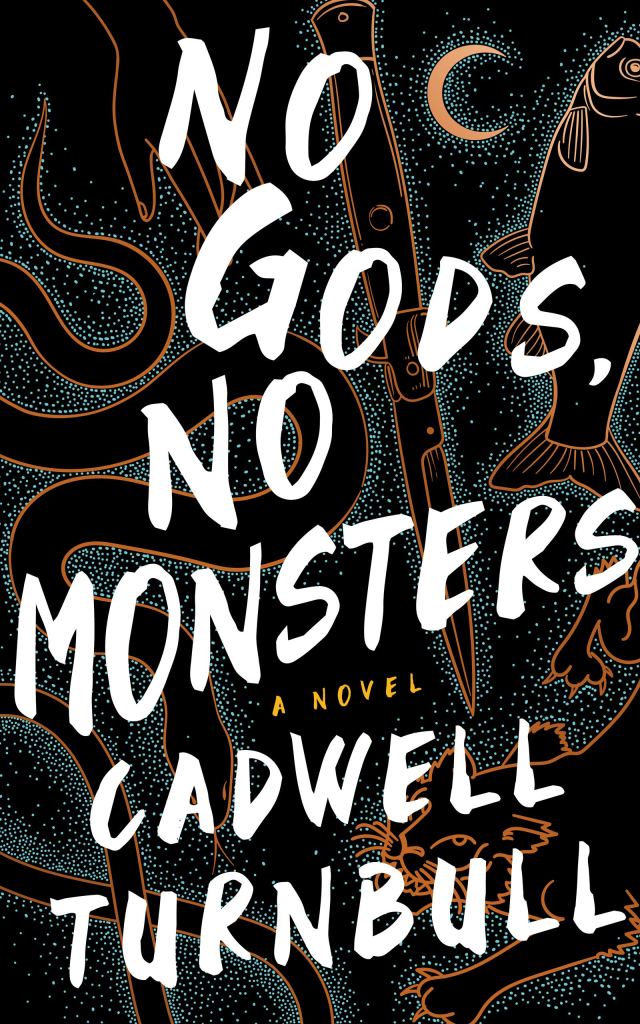
No Gods, No Monsters by Cadwell Turnbull

I’ve read a couple of horror/monster related novels already this year, with Mark Matthews’ The Hobgoblin of Little Minds being the pick of the bunch. Cadwell Turnbull’s second book, No Gods, No Monsters, is a different beast altogether, if you pardon the pun. Both authors offer a fresh take on the werewolf mythos, preferring to focus on the psychological effect of actually being a monster in a contemporary environment. Whereas Matthews’ book is a visceral gut-punch, Turnbull’s novel is more reflective, has a larger cast of characters, and weaves its story through time and locations which don’t, at the outset, seem to connect with one another. But they do, in the end. How Turnbull gets there is genius.

It’s a difficult book to give a synopsis of, but I’ll try. The book is framed and narrated in parts by Calvin who, like the author, is a native of the U.S. Virgin Islands. He ends a relationship when he learns of his brother’s death. He goes back home to reconnect with his niece. Laina, who I consider to be the main character, has also lost her brother, Lincoln, who was gunned down by police. Echoes of police violence on people of colour in the U.S. and elsewhere weighed heavy on my mind as I read this and other parts of the story. Laina learns of a video of her brother’s shooting and immediately shares it online. It is proof that monsters live among us, because her brother was one. But the video is mysteriously edited, leaving Laina and her husband Ridley knocked back emotionally.

And that’s just two of the many character arcs going on here. Throughout the novel we learn of a war between two secret societies: one wants to let the world know that monsters co-exist with regular humanity; the other uses violent means to suppress the information. Caught between the two is a young boy with powers of his own, enough to turn the tide one way or another. He is protected by a group of women which includes a tech mage and a woman who literally takes her skin off and becomes invisible. The boy, who I won’t name because it’s a spoiler of sorts, is hunted by a man who’s been maimed in a ritual. It’s all sorts of crazy, and somewhere in the back of it all, there’s a debate on quantum physics and the ability to slip between dimensions. So, some of what happens occurs in our world, I think, while other events occur in a parallel universe.

Cadwell Turnbull (credit: Anju Manandhar)

One of the many things I love about this book is the diversity of its characters. Cadwell Turnbull brings them to life in a way I’ve not experienced in my reading too much of late. Turnbull brings his Caribbean culture to life in these pages, flavouring his book with characters that do not identify as ‘straight’ or binary. Despite being self-proclaimed monsters in the classic sense, they are as human as you or I, and share similar needs and identities as any of us on this planet. This book left me with a need to read more fiction by authors who don’t look like me, or live a lifestyle similar to mine. I consider this a must in this day and age.

Although No Gods, No Monsters is a fantastical tale, brilliantly written and told, the depth of feeling and sense of urgency is as real as anything you would see in our world. This book will sit with me for some time to come.

My thanks goes to NetGalley and Blackstone Publishing for supplying me with an ARC of No Gods, No Monsters, in exchange for an honest review. The book will be published on September 7, 2021. Get your copy now. You won’t regret it.

The Count of Monte Cristo: Chapters 13-17

Read the previous instalment here.

These next four chapters lay the trail for Edmond Dantes eventual escape from the Chateau d’If. This is an important section for the book because, away from the political to-and-fro of early 19th century French history, we get to spend a decent amount of time with Dantes and his new-found friend and spiritual adviser, the Abbe Faria, the ‘Learned Italian’.

Napoleon has been banished once more, and Louis XVIII has been restored to the throne. No better time for the inspector-general of prisons to do his rounds and see how things are with the inmates of the lonely island Dantes calls home. Dantes spies an opportunity to appeal to the man who, in all fairness, sees no reason why Dantes should even be in prison. Having listened to his pleas, the inspector-general promises the innocent man that he will look into his case. Dantes feels hope at last, thinking that de Villefort’s notes will save him. However, the opposite happens. Conspiracy runs deep and the prosecutor’s lies, and his desire to hide his own relationship with Noirtier further damn Dantes’ claim to be released. There is nothing the inspector-general can do.

Nor is there anything he can do with the other prisoner he visits, the seemingly mad Italian Abbe Faria, who promises the inspector-general untold wealth if his release can be secured. Faria has a treasure buried somewhere and he’s willing to part with most of it if his pleas are met. The governor and inspector-general think him mad and leave him to rot away. Prisoners 27 (Faria) and 27 (Dantes) are left to fend for themselves.

Dantes falls into deep despair, at one point threatening to starve himself to death, such is his plight. His prayers to God go unheeded; and he’s oblivious to the fact that other people who were close to him put him where he is now. But when he hears a noise coming from the other side of his cell, he tricks his jailer into leaving his dinner pot behind and starts scratching away at the sound. Then he hears a voice. After some time and much scraping away at the wall, he meets his neighbour, who turns out to be the Abbe Faria, who comes into Dantes’ cell.

Far from being mad, as his jailers deem him to be, Faria is a resourceful man. Imprisoned because of his belief in a unified Italy, Faria is a polymath who becomes Dantes’ tutor in the years they spend together. He teached Dantes other languages and soon enough Dantes, an intelligent if naive man, quickly learns the basics in Italian and English. Faria also proves to Dantes that Caderousse, Fernand, and Danglars were the men behind his captivity. Dantes swears revenge. Together they hatch a plan to escape. Faria, much to his own despair, works out that he’s been digging in the wrong direction. So, between planning another route, and learning mathematics and philosophy, the two men bond over a mutual need for freedom.

Before their plan can come to fruition, though, the abbe has an epileptic fit. The man knows he’s on limited time, with an arm and a leg becoming paralyzed. Dantes swears to not leave his friend while he’s alive.

Tempest of Bravoure: Kingdom Ascent by Valena D’Angelis

Meriel Ahn Arkamai is dokkalfur, a dark elf, on the run from her past, and heading into a future she’s very unsure of. Going by the her preferred name Ahna, she has kept her true identity and magical abilities safely hidden away for fifty years. The world she lives on is called Terra, but she’s a Dwellunder by birth, feared and respected in equal measure.

The war which led to the Prince of Mal, Xandor Kun, becoming the Dark Lord Sharr, took everything from Ahna: her home, her family, her reason to be. So she left it all behind, with only her friend, the woman who calls her ‘sister’, Kairen, keeping her from straying into total despair. Ahna has, for years on end, spurned Kairen’s call to join the Resistance, but another encounter leads her back into the fold. Ahna isn’t accepted by all, though. Her race leaves others suspicious of her intentions, as Lord Sharr is a dark elf himself, but she gets by because Kairen and her husband David trust her. Ahna doesn’t have the luxury of time to settle in with her new kinfolk, because the Resistance is plotting a new attack, focussed on Bravoure City, the fabled City of Gold.

Valena D’Angelis is a new author, and she debuts with Tempest of Bravoure: Kingdom Ascent, an intriguing addition to the genre of epic fantasy fiction. I finished it over the course of four days, frantically swiping my Kindle to find out where her story was heading. Sure, it has most of the tropes of the genre front and centre: there’s a prophecy; there’s the heroine’s journey; there’s a dark lord to be vanquished; there are diverse races living on or beneath an Earth-like environment; and there are monsters — dragons to be precise. So far, there’s enough here for fans of JRR Tolkien, Terry Brooks, and Robert Jordan.

Valena pulls no punches when it comes to her action scenes; they’re bombastic in scale, and as violent as anything you’d read in modern fantasy. She inhabits her world well with a decent number of likeable characters, important to both plot and main character, that when a couple of them inevitably meet their end, you mourn them. It’s easy to root for Ahna, and while the villain of the piece can be a little boo-hiss from time to time, he has a reason to be who he is and do what he does.

A major subplot I found compelling was the relationship between Ahna and Cedric Rover, a shrike captain, who’s initial loathing of both himself and the dark elf evolves over the course of the book, in a couple of very surprising ways. In this book, secrets are everywhere, but family, in the end, is everything.

One thing I’d like to say, though, is the world of Terra is vast and well-populated. It appears to have a history that goes back eons, with events important to the overall story mentioned briefly and then we move on. I would have enjoyed this book more if it was longer. I know a lot of readers don’t enjoy massive tomes, but in the fantasy genre especially, world-building is a vital part of what makes fans like me really get into a story. Here, there’s a lot of telling without showing, and a part of me was disappointed that there was no deep dive into Terran history, politics, and magic systems. However, I hope in the forthcoming books, we’ll get more exploration.

I give Valena D’Angelis all the kudos in the world for putting her book out there. I know in my heart that she will get better with each novel she publishes. She has made a great start here, and I look forward to reading the second book in this series, Castaway, some time in the near future.

The Eddie Flynn Series by Steve Cavanagh

I was brought up on crime thrillers. Nothing excited me more than watching the good guys catch the bad guys, and getting them put away for murder and fraud. I also enjoyed thrillers where an innocent person needed help to clear their name. I watched old shows like Petrocelli, where a low-key defence attorney who lived in a trailer used his skills and intellect to get his clients cleared of crimes they did not commit. (Occasionally he got it wrong, but he always stuck to the law.)

Modern shows like Law & Order, in all its incarnations, focus on both law enforcement and criminal justice, and are equally compelling in presenting the thrills and spills of the legal system. It’s deeply flawed nationally and internationally, but when it comes to fiction writing, the genre lends itself to providing many, many hours of entertainment. The current HBO show, Perry Mason, is testament to how popular crime and courtroom dramas are and will remain.

Belfast native Steve Cavanagh is a writer who’s currently riding high on the success of a series of electric and exciting novels about New York lawyer Eddie Flynn. To say Eddie is offbeat and eccentric is to do an injustice to a man who uses every trick in the book and under his sleeve to win a case, normally at great cost to himself and those around him. A former con-man and street hustler, Eddie was driven to use his skills in misdirection to help his mother during a medical insurance case.

The first novel proper in the series is The Defence. Eddie’s personal life is a mess, and he’s lost his way in life, but he’s dragged back into court with a bomb strapped to his body, and his daughter’s life in danger. Forced to defend the head of the Russian Mafia in New York, Eddie is in a literal race against time. And did I mention he’s also got a drinking problem? All of this in the first couple of chapters, too. Cavanagh wastes little time on the niceties, and we’re all the better for it. Of course, Eddie realises that no matter what he does, he’s toast, just like his former partner. So he draws on his experience on the streets and in the courtroom, and with the help of a friendly judge, uses the 48 hours he’s been given to turn the tables on his new employers. The book is high-octane, a page turner, and Eddie has always one more trick to play. The pace never lags.

Steve Cavanagh (Credit: Kelly M Photography)

After finishing The Defence, I picked up the other four available books in the series. In The Plea, the FBI and CIA blackmail Eddie into defending a client who’s been accused of murdering his girlfriend. The agencies want Eddie to get the accused man to admit his guilt and take a plea. But Eddie knows there’s more going on. In order to protect his estranged wife, who’s unknowingly tied to a money laundering scheme, he has to go head-to-head with a highly ambitious district attorney who looks down on Eddie as being unworthy of his time. This is another excellent thriller, and Cavanagh lays on the surprises and twists with dexterity.

The Liar continues the trend, with another serpentine story involving Eddie defending an acquaintance from his younger days who’s been charged with the kidnapping and murder of his own daughter. Convinced of his friend’s innocence, Eddie works the case while also helping out the friendly judge, Harry Ford, whose career is in jeopardy due to another lawyer who has demanded the release of casework on a trial the judge was working on. The Liar introduces Agent Harper of the FBI, who eventually works side-by-side with Eddie as the twists come chapter after chapter. Both plots are connected and Eddie and co. have to find out how.

My persona favourite of the series is Thirteen. Eddie is at the centre of the celebrity murder trial of the century. Bobbie Solomon, a movie star, is charged with the murders of his wife and security guard, and Eddie takes on his defence. The twist in this book is that a serial killer, known only as Kane, has found their way onto the jury. This is a premise that can only come from the mind of Steve Cavanagh. There are echoes, however faint, of John Grisham here, but Cavanagh takes his level of plotting to another universe. He mixes the chapters with first person narrative from Eddie himself, and the sinister voice of the killer. The clues as to who this person is are laid out throughout the book, so that when the big reveal comes, we’re not tricked. Bamboozled, stunned, yes; but not taken for fools. Thirteen is glorious.

The last (for now) is Fifty-Fifty, the premise of which is deceptively simple. Two sisters, Alexandra and Sofia Avellino, are accused of the murder of their father. Each blames the other for the crime. At the centre is a $44,000,000 inheritance. The sister found innocent will get the lot. The other goes to prison for life. Eddie represents Sofia, while another lawyer, Kate Brooks represents Alexandra. As in the previous novel, the guilty party, ‘She’, gets chapters to herself. So which of the two lawyers is on the winning side? Cavanagh once again piles layers upon layers of twists, surprises, intrigues, and a shocking death midway through adds to the punchy storyline.

I am in awe of Steve Cavanagh. From the first book till now, with a new one due out hopefully this year, I haven’t read anything near as compulsive and propulsive as the Eddie Flynn novels. He leaves the likes of Grisham and co. for dust.