Category Archives: Reading

2020 and All That.

2020 has been the most challenging year many of us have ever faced. Even if we haven’t lost someone close to us, we know someone or a family who has. It’s been a lot. But while the new year won’t bring us a hallelujah moment immediately, it’s important to note that although the light at the end of the tunnel is still far away, we’re moving ever closer to it. We still have to take care of ourselves and those around us, and not do anything silly that could jeopardise our futures.

I’m not going to get all introspective. We each have our own stories to tell about year about to pass, some more heart-breaking than others. But we’re still here. We survived so far. And 2021 is right around the corner.

I’m not one for New Year Resolutions. In fact I got very little done during the year, and it was only in the last month that I put myself in front of my laptop and created this blog. I count that as a win. I read plenty of books, and my TBR pile is gargantuan. But I’ll get through most of them.

Authors and their agents have begun emailing me and DMing me on Twitter, politely requesting reviews for their currently published and upcoming books. I’m cockahoop with joy about this. I intend to get through as many as I can, taking into account I’ve got my own stuff to do this year. (Yes, 2021 will be the year I finish my own novel’s first and, if I’m diligent, second draft of the novel that’s been in my head and computer for years.) I owe it to myself to do this. So, I’ve plenty to look forward to. I think we all need a goal for 2021, even if that goal is personal rather than professional.

I hope that we can, sometime in 2021, go see a movie, eat out at restaurants, and be close to family and friends. We’re human, and there’s nothing more human than being around other people who make us feel good. A lot of us haven’t seen our parents, grandparents, andsignificant others for a long time. But we need to hold out just a little while longer. The wait, I know, will be worth it. We have to do better for ourselves and each other. Also we need to be kind to ourselves and each other. Events of the last year have changed us: it is my hope that they’ve changed us for the better. Time will tell.

So, for my part, I will continue to read, write, and take better care of myself. I have a feeling 2021 will be a banner year for me and the people I love and care about. Let each of us do our part. Live. Learn. Love. Read. Listen to music. Dance and sing. Let us be responsible. Let us welcome in 2021 with hope, but never forget the lessons of 2020.

Happy New Year to you and yours. I’ll see you on the other side for more book reviews, book-related essays, and of course, my attempt to read The Count of Monte Cristo a few chapters at a time. Stay tuned.
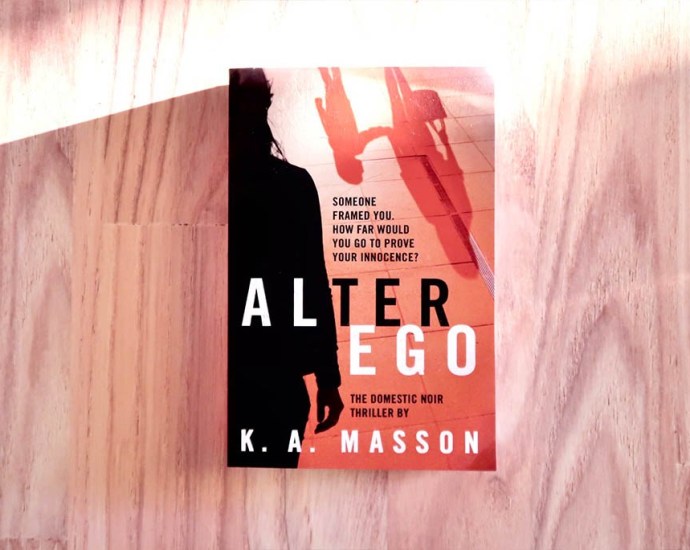
Alter Ego by K.A. Masson

Any book that name checks Matt Johnson’s The The, and in particular Uncertain Smile, has got to have a lot of things going for it, right? In fact, this book, Alter Ego, the debut thriller from English writer K.A. Masson, is peppered with plenty of musical references throughout its taut narrative, with two of the story’s main characters at one point going through their Spotify playlists and cranking out some banging tunes, with no decade being left out. But it was the The The reference that sat with me. I haven’t listened to this band for some time, and when I’m done writing this review, I will queue up Soul Mining and get all nostalgic.

(Image: heyitscarlyrae.com)

Alexandra (Alex) Kendrew is a single mother who lives with her young son Ned in suburban London. Estranged from the boy’s father Sean for some time when the novel begins, Alex trawls dating websites looking for love and someone to settle down with. She’s a freelance photographer who juggles her professional and personal life, and during the course of the story, drops balls on a regular basis. Some of her friends question her lifestyle choices and parenting skills, but Alex knows what she’s doing.

Or does she?

When Alter Ego begins, Alex is arrested for the attempted murder of her boyfriend Mal Russell, who was brutally stabbed the night before in the flat he shares with a friend. Alex has been identified by said friend as the woman who she admitted to the flat and subsequently stabbed Mal. Alex doesn’t believe what’s happened to her. There is no way she could’ve done what she’s accused of. She was at home with Ned. The detectives investigating the case don’t believe her, and lock her up in a cell while they collect enough evidence to charge her. Alex’s arrest happens in the first chapter, so there’s an immediacy to the story already. What the author does next is take us back four years and work us through Alex’s life until the time of her arrest.

Alex hooks up with a couple of men she met online, some better than others, but lands on Mal, who appears to be the man of her dreams. Things go pear-shaped quickly when Ned wanders in and catches them in an private but awkward moment. As Mal still holds a candle for a recent ex, he ghosts Alex shortly afterwards. She is distraught, but manages to pick herself up off the floor when Adrian comes into her life. Then things take a really nasty turn, with Adrian turning out to be a wolf in sheep’s clothing. Not for the first time, Alex is left with a mess to sort out, but desperate to not be alone, she jumps at the chance of salvation when Mal comes back into her life.

I’ll leave it at that for the plot, for fear of giving too much away. I would prefer to leave you in the more than capable hands of K.A. Masson to take it from here. I had to remind myself that Alter Ego is a debut novel, because it reads like Ms. Masson has had a number of novels under her belt already. She is masterful at holding the story together despite having to fill in a lot of blanks over a four year period. The tension rises with each chapter, and I confess to reading the last third of the book in one late night sitting. I had to find out what happened, and I wasn’t disappointed.

K.A. Masson

One proviso, though: Alex as a character may not appeal to those who prefer their main characters whiter than white, with nary a blemish to their name. But for me, it was important to relate to Alex as a woman troubled by her past and fearful of her future. At times she is the author of her own misfortune, making the same mistakes in dating time and again, without really learning from past behaviour. This is a completely human characteristic. We want things to go well for ourselves, and when our friends point out our failures, we can sometimes take this criticism as a personal insult rather than a learning moment. Ms Masson does well by giving us a deep insight into Alex’s thought processes with her tight first person point of view. We see what Alex sees; we feel what she does; and we want her to do better. She could — and this is something to keep in mind — be an unreliable narrator. Not everthing that happens is what it seems; the same applies to the people around her.

Alter Ego is an intelligent psychological thriller with moments of violence that will make you uncomfortable. Domestic violence is a blight on modern society, and the author brings a lot of research into her story. I seriously look forward to what she writes next.

I wish to thank NetGalley and the publishers for supplying me with a copy of Alter Ego in return for an honest review.

Gotta Read A Classic

Back in 1982, Adrian Gurvitz, a British singer-songwriter, recorded a song called Classic. If you remember the 80s well (and I do), you might know this tune. In it, Gurvitz says he’s going to write a classic novel, in his attic, as a way of dealing with his broken heart. It’s a nice song, and it sat with me at the time. I too longed to write my own classic, having had my heart broken so many damn times. I may still do, though my heart is set fare, fully mended and settled with Her Ladyship.

Going back further in time, I’m sure most of you had to read classic novels as part of your curriculum. I recall drudging through Charles Dickens’ Hard Times in particular. But one English teacher recommended the class read John Wyndham’s The Day of the Triffids and Richard Adams’ Watership Down as side exercises. I enjoyed these better. Since school, though, I’ve found it difficult to read literature from bygone eras. My attempt to read Moby Dick failed more than once, and the less said about James Joyce’s Ulysses the better. I hadn’t the stomach for either of these classics.

I mentioned in a previous blog post that I would like to, at some point, read Alexander Dumas’ The Count of Monte Cristo. I’m sure we’re all reasonably familiar with the basic story. Edward Dante is wrongly accused and convicted of treason by jealous rivals, and sentenced to life imprisonment on the island of Chateau d’If. Following a brave escape, he comes into great wealth, takes on a new identity, and then spends a number of years plotting revenge against those who betrayed him. I’ve seen the 2002 movie version and I enjoyed it. Now, 18 years later, I’m about to take on the book itself.

I ordered a copy online and it arrived yesterday. The edition I have was published in 2013 by Canterbury Classics, and is 1,055 pages long. The book contains 118 chapters, and if I get through it, it will be among the longest titles I’ll have ever read. (I think the longest book I’ve read is Stephen King’s complete and uncut edition of The Stand, which clocked in at 1,152 pages.)

So here’s the plan, dear reader and follower: I would like to read The Count of Monte Cristo along with you, if you’d like. I will read at least two or three chapters at a time, then post my thoughts and review each time. It’ll be a challenge that will kickstart 2021, and if I’m successful in my endeavours, I will continue the trend with another novel, many one that some of you will chose for me. There will be a post at least once a week, aside from my regular reviews and articles. I’m looking forward to it, as well as being slightly daunted by what’s ahead. But at least it’s not Ulysses. Come along for the ride. I would appreciate the company.

I’d like to take this opportunity to wish you and yours a safe, merry, and healthy Christmas. Watch out for each other. Don’t do anything foolish, and I’ll see you all on the other side. Take care and be well.

James

Childhood Christmas Books

I think I was about six or seven years old when I found out there was no real Santa Claus. I shrugged when the realisation hit me. It came about when I found a bag of books and toys hidden in my parents’ wardrobe (don’t ask me what I was looking for at the time; I can’t remember). My mother found out and came clean. To be honest, I was more interested in the books.

I can’t recall what titles they were. I just know that at the time I read pretty much everything Enid Blyton wrote, from The Famous Five to The Secret Seven, and beyond. (I stayed away from Noddy because he just wasn’t my thing.) I loved the adventure, the derring-do, and the sheer upper-class Britishness of Blyton’s books despite me being Irish, and I don’t think there was an Irish writer at the time who did what Blyton was doing. I am ready to be corrected, though. This is just my memory.

Every Christmas I would get books from my parents. About a month before the holidays I was given x amount of money to spend on books, and I would walk up to a nearby shopping centre where the only bookstore within a manageable distance was located. The store was called Books Unlimited and there I found a corner of joy in a world that was at the time, in the mid-to-late 1970s, going mad. (SPOILER: It’s still going mad.) As the seasons passed, my reading tastes changed. I left Enid behind and graduated straight to adult class literature. Smugglers Top was replaced by the Orient Express and mysterious goings-on at Styles. I devoured Agatha Christie, who is to this day, the best-selling crime novelist of all time. My wife and I would listen to podcasts dedicated to Dame Agatha’s books, particularly All About Agatha, hosted by Kemper Donovan and Catherine Brobeck. My wife would also listen to Christmas themed stories on audio at night time. (I’ve lost count of the amount of times I’ve heard Hercules Poirot and The Adventure of the Christmas Pudding this month.)

Later years would see me pick up every action thriller written by the great Alistair MacLean. I’m sure many of you will have seen the movie adaptations of some MacLean’s books, especially The Guns of Navarone and Where Eagles Dare, but the books are where it all began. He was a prolific writer, and while his characters and dialogue would be considered tropish in this day and age, you can imagine the thrill I got when I started a new story. At the time, there was no writer like him, even if the likes of Len Deighton and Hammond Innes were, without question, better at the craft.

Then, with the popularity of horror fiction coming in the wake of the blockbusting success of The Exorcist and The Omen, I read books of terror and dread into the small hours of the morning. I discovered Graham Masterton, who still publishes to this day. (In fact, I have a new book by Masterton on my NetGalley shelf, which I will read and review ahead of its publication this coming February.)

So, for me, Christmas was as much about new books as it was about food and family. And I love to think back to how it all started, with Enid, with Agatha, with Alistair, and how I looked forward to finally getting my hands on the books that had been bought by me and for me in the run up to Christmas Day. This year I can’t wait to open up the present I bought myself. More on that later.

Ring Shout by P. Djèlí Clark

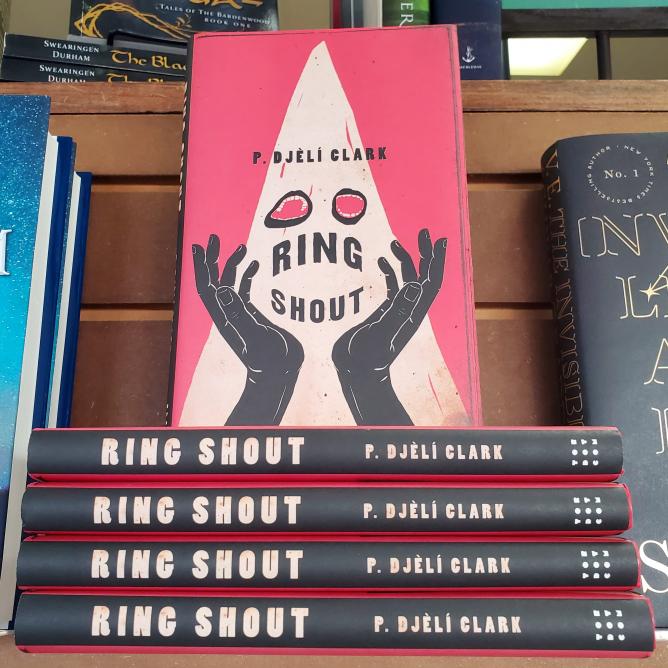
P. Djèlí Clark is an author I’m reasonably familiar with. Every now and again I like to read novellas, and because my chosen genre within this format is invariably horror, science fiction, and fantasy, I always find I’ve a lot of titles to choose from. By far my most favourite novella is Victor LaValle’s The Ballad of Black Tom, his revisionist and masterful retelling of HP Lovecraft’s short story The Horror at Red Rock. Lovecraft is well-known for his racism and xenophobia, and Red Rock is risible reading and is justifiably disdained. LaValle retold the story from the viewpoint of a Black man and put right everything that was wrong about it. I wrote a review some time back for MTR Network, which you can read here. P. Djèlí Clark may have written a story to knock LaValle off the top of my list, though. Ring Shout is as good a read as you can get, but it’s not a comfortable one: nor should it be.

(Image: cavalierhousebooks.com)

The setting is Macon, Georgia, 1922. It is Jim Crow South. Our lead character is Maryse Boudreaux; she hunts monsters called Ku Kluxes, and she has a sword enchanted with the spirits of kings, chiefs, and slaves from centuries past to aid her in her quest. Their pain, anger, and hate fuels the sword, igniting it with righteous fury and the desire for retribution. P. Djèlí Clark creates an alternative history where the premiere screening of D.W. Griffith’s movie The Birth of a Nation calls into this world demons from another dimension who use White people’s hatred of Black people as a way to gain a foothold on Earth. There’s the Klan, and then there’s the Ku Kluxes: both separate but connected. Maryse and her friends roam the county and kill as many Ku Kluxes as they can. A wonderfully rounded-out supporting cast includes Sadie, a sharpshooter who carries her Winchester (Winnie) with her wherever she goes; Chef, a cheerfully queer WW1 veteran who’s the group’s explosives expert; Emma, a German girl who spouts Marxist philosophy but knows what it’s about; and Nana Jean, the community’s matriarch who is pure Gullah from start to finish. Clark doesn’t need to translate her dialogue for us; we need to do that for ourselves.

Then there’s the Aunties: Ondone, Margaret, and Jadine — they seem to be from the world the Ku Kluxes came from, but enlisted Maryse when she was a child to be their champion. They appear to Maryse in dreams and visions, helping when they can, but knowing that whatever happens, it’s Maryse who gets to make the final choices. Traumatised by the events which took the lives of her family, Maryse and her friends find themselves in a race against time. Butcher Clyde, who describes himself as Ku Klux management, intends to use Maryse as a pawn to bring an even greater evil into the world, with yet another screening of The Birth of a Nation, this time using Maryse’s lover Michael George as bait.

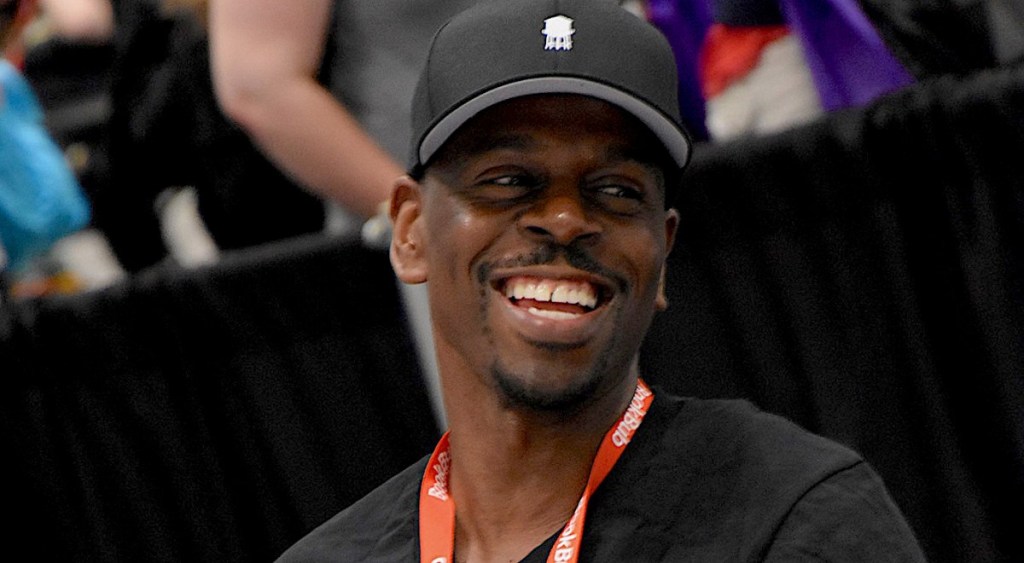
(Image: blacknerdproblems.com)

The Shout of the title is a chant and ritual that helps create Mama’s Water, a bootlegged liquor that’s potent in magic and mysticism. Nana Jean oversees its production, and it earns the community enough money to keep everyone going. Clark is brilliant in how he allows us to catch up with Gullah traditions, but yet keeps the story moving at such a pace that you’ll be hard-pressed not to finish it in one or two sittings. As I said earlier, Ring Shout is not a comfortable read, for many reasons. It’s a horror novel first and foremost, and the violence is frightening but creative. Like Victor LaValle’s novella, this is a story about Black people living and dying in a world where White people want them dead. It’s about how Black people survive despite the threats against them. There are no White saviours in Clarke’s story, nor should there be. When Butcher Clyde tries to use Maryse’s rage to end White domination, but bring a greater evil to power, Maryse’s choice is the result of centuries of Black repression. It’s powerful, intense, bloody, and cathartic. It’s also a beautiful thing to read.

P. Djèlí Clark has written something majestic. I read a previous novella, The Black God’s Drums, and was very much taken by it. He has another, The Haunting of Tram Car 015, which I will read very soon. I’m also looking forward to his debut novel, A Master of Djinn, which is due out in 2021. He’s a writer to watch out for.

P. Djèlí Clark

My Year in Books and Sudoku: 2020

As we’re just weeks away from throwing 2020 into the trashcan, many websites and media outlets are doing what they can to throw a positive spin on what has been a tumultous time for citizens of this planet of ours. It’s a hard task, I know. Many of you reading this will have been directly affected by the pandemic that wreaked havoc on the way we live our lives. Some of you will have lost someone dear, and are still unable to grieve properly because of national and international social restrictions. Life hasn’t been fair, and while we see a chink of light in the near distant future, we’re still anxious as hell.

(Image: Literary Hub)

But we found ways to cope. For me, while I was apart from my family in the US, I gained solace in three things. I put a lot of effort into cooking and baking, not just for me but for my family in Ireland. Cooking for others is a sure-fire way of showing love and gratitude, and it’s something I’ve done quite a lot of this year. The second thing to give me comfort just when I needed it is a YouTube website called Cracking The Cryptic. Thanks to an article from The Guardian in May, I came across two English gentlemen, Simon Anthony and Mark Goodliffe, who live solve complex puzzles twice daily. During the course of this year, they picked up so many subscribers to their channel that they now have over 303,000 followers, with one particular video attaining over 2.1 million views. They work hard on their content, and are a joy to watch. Because of them, I now attempt theNew York Times Hard Sudoku a few times a week. We take our comfort where we find it, and if it ends up being good for our brain, well, all the better.

Thirdly, and just as important, there wasn’t a time when I wasn’t reading a book. I started the year finishing off Stephen Donaldson’s Last Chronicles of Thomas Covenant, and began my journey to more than 40 books read in a calender year. Not a record, though: a few years back I managed over 50. One of the highlights of my reading year was James S.A. Corey’s science-fiction series The Expanse. I read books two through eight consecutively, touching nothing else until I was done. Now, like all Expanse fans, I wait for the new season to drop on Amazon in a matter of days, and the release of the ninth and final book in the series, Leviathan Falls, next year. Right now, I’m reading Ring Shout, P. Djèlí Clark‘s new novella. I’ll post a review of this brilliant piece of dark fantasy in a future blog.

Throughout the short life of this blog, I’ve written about many of the books and authors I’ve encountered this year. Very few, if any, let me down. And I read everything I started, including the bad boy of the bunch, Ellery Queen’s The Roman Hat Mystery, a book with a reveal so racist and disgusting, it will be a long time before I try anything from that era again. But it did lead me to Martin Edwards and his Rachel Savernake series, so at least some good came out of it. I enjoyed books mainly in the mystery, thriller, and sci-fi/fantasy genre. It was the kind of year where I needed the escapism, and I doubt 2021 will change my approach. Hooking up with NetGalley allows me to request books pre-publication, and I have Caldwell Turnbull’s hotly anticpated follow-up to The Lesson, No Gods, No Monsters, to look forward to early in the New Year.

So, do I have any favourites, any book I would urge you to read right now, out of all the ones I’ve read this year so far? Well, I’ve written about Anthony Horowitz twice already, so his books and series are always a good place to start. Mary Robinette Howal’s Lady Astronaut series will always have a special place in my heart, combining science fiction and alternate history with some whip-smart and hard-hitting social commentary. Get on these if you haven’t already. Steve Cavanagh continues to knock it out of the park with his Eddie Flynn series: Fifty-Fifty was yet another stunning legal thriller that very much kept to the high standards of previous instalments. Shout-outs to Kellye Garrett and Rachel Howzell Hall for providing me and their fans with a hefty dose of LA-centred crime fiction. Their characters and prose kept me up and entertained many a long night this year. I especially loved Rachel’s And Now She’s Gone, but I can’t wait to see what Kellye has in store for us in 2021.

For the year that was in it, Dave Hutchinson’s Fractured Europe quartet was a dream to read, and a nightmare to contemplate. I still want Rudy to cook all my dinners, though.

I hope to read at least 50 books in the forthcoming year, and it will give me great pleasure to talk about them on this website. I would appreciate the company, but with the world being the way it is right now, we’re all we’ve got and we need to stick together. Let’s live, love, read, and enjoy, and never stop caring for each other. Well done for making it through so far. I’ll see you on the other side.

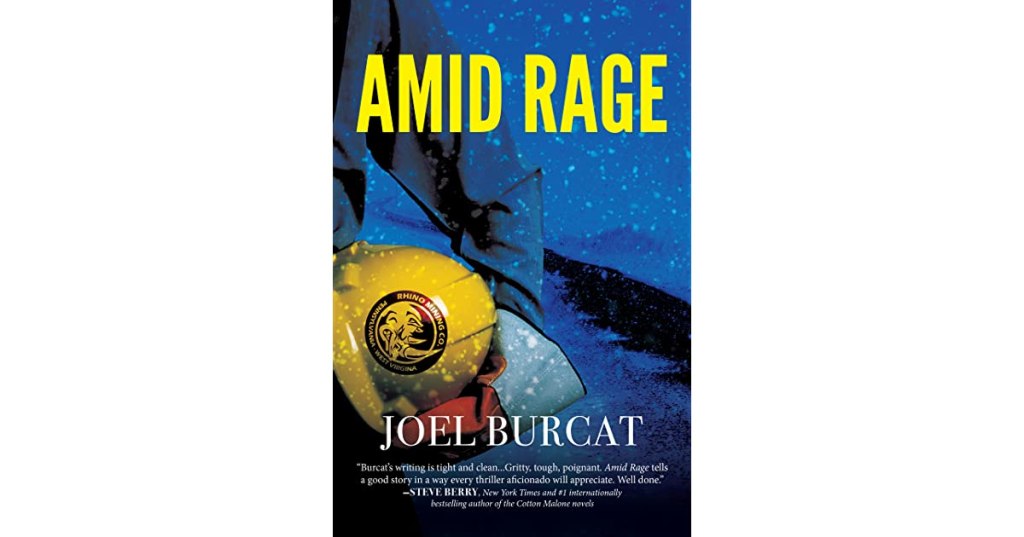
Amid Rage by Joel Burcat

Mike Jacobs is a young, up-and-coming litigator in environmental law, working for the Department of Environmental Protection in the state of Pennsylvania. He knows his job, is diligent, and can go rogue now and again, working behind his boss’ back and against standard protocol to ensure the law protecting the land and the citizens that live on it are safe-guarded. Professionally he’s got what it takes. Personally, though, his life is messy.

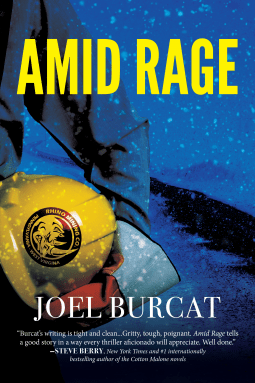
Amid Rage is the second book in PA author Joel Burcat’s Mike Jacobs series, the first being Drink To Every Beast, which was published in May, 2019. I’ve yet to read the first book, but happily Amid Rage is enough of a stand-alone novel that doesn’t require the reader needing too much prior information: Joel Burcat fills in the blanks early on in proceedings, allowing you to plow ahead with what is quite a page-turning story.

It beings violently, with the death of a mining inspector: he’s burned to death in his home by the villain of the piece, Ernie Rinati, the owner of Rhino, a mining company. Rinati isn’t getting what he wants from the DEP, with too many conditions placed on his operations, rendering him unable to make the kind of money he feels he deserves. He’s not above pressuring homeowners into buying up their property at knock-down prices, either. Basically he’s a vile human being, valuing the life of his three-legged dog Butch over anything or anyone else. Unfortunately, though, he’s a one-note and rather cartoonish villain.

Joel Burcat’s speciality, however, is in the court room. A practicing environmental lawyer himself, the Philadelphia native brings his experience to the table, giving us courtside seats to the legal wrangles regarding permits and temporary restraining orders (TROs). All of this wouldn’t be half as exciting if there wasn’t a decent story to tell, and Burcat has one, thank goodness. At the centre of the plot is a piece of land that Rinati wants to mine on. In his way are people who own homes on that land. The DEP has allowed Rinati some leeway, but not enough. The homeowners resist his efforts and have hired an inexperienced lawyer, Miranda Clymer, to lead their lawsuit. Mike’s orders are to act as observer only, but a startling bit of sexual blackmail forces Mike to take a more active role than his department allows. (I did mention that Mike’s personal life is messy as hell, right?)

So he’s on his own, although he does, in all fairness, inspire a couple of close friends, Ben and Nicky, to help him out. If it wasn’t for the fact that Rinati is obviously insane, and has henchmen that would make Darth Vader question his choice in allies, Mike would have an easy time of it. But no! Danger lurks in every chapter of this fast-moving, and for the most part, engrossing thriller. Saying Mike Jacobs is just a lawyer is like saying Indiana Jones is just an archaeologist. Mike’s pursuit of the truth gets him and his friends into a lot of trouble, with Nicky especially feeling the full force of Rinati’s vengeance. Parts were uncomfortable to read, but in the end I see what Burcat was aiming for. In fairness, I would’ve preferred if he drew his characterisation of women better;in many instances men, including Mike Jacobs, spent far too much energy ogling their physical characteristics to the point of fantasism and wishful thinking. They’re strong characters in their own right, but I felt they needed their own agency rather than being at the beck and call and the subject of abuse from their male counterparts. Still, it was good to see such abusers get what they deserve.

Joel Burcat

Burcat brings the story to life with principled and unprincipled attorneys. I like how Mike has to deal with people from his past who haven’t made his life and career any easier for him. Watch out for Judge Diaz and Sidney Feldman. It’s in the courtroom scenes that this novel really comes to life. The action scenes are well done, too. But it’s the personal bits, where Mike questions his choices in love and romance, that need a bit more spark and care. I like Mike a lot. He has a lot to learn, but he’s willing to work hard, and he makes it up as he goes sometimes. Which is what most of us are doing right now, I guess. I give Burcat praise for writing a book that I pretty much enjoyed reading. I expect him to get better the more he writes and publishes.

I thank NetGalley and the publishers for supplying me with a copy of Amid Range prior to publication (Feb 2021) in return for an honest review.

The Thirteenth Post

I really want to read The Count of Monte Cristo. Don’t ask me why; but from centuries of classic adventure fiction, Alexander Dumas’ story has always captivated me. I’ve seen a couple of adaptations in recent years — the Jim Caviezel/Guy Pearce movie from 2002 springs to mind — but rarely is the full story told. And if you know anything about me, when it comes to books, I need the full story. So I’ll get a good copy of this classic for myself this Christmas. Hopefully I’ll have better luck making my way through this than I had with Hugo’s Les Miserables (I made it about 50 or so pages in before I put on the musical instead –not the movie musical, but a West End cast recording).

(Image: Handcrafted Hollow Book Safes by BookRooks)

So I’ve decided to take a couple of baby steps into the arena. I set up a second Twitter account that will deal specifically with all things books, book reviews, arts and entertainment. I set up a Facebook page for the blog, as well as a second Instagram account. I signed up to NetGalley and am now reading a book for an upcoming review. It’s an environmental legal thriller called Amid Rage, by Joel Burcat, the second in his Mike Jacobs series. I’m liking it so far. I have so many books on my TBR shelf that I didn’t know where to start, but I set my stall with this one. The great thing about NetGalley is you can request to read a book before its publication, and if the book’s publisher likes the cut of your jib, you get access to an ARC in return for an honest review. Sounds like a good deal. It means I get to read for pleasure and a review. It passes the time nicely.

(Image: Goodreads)

A little over six weeks ago I posted on this blog for the first time in years. I deleted all the old content because it didn’t service my need any more, but I wanted to do something with what little space I forged for myself online. I read many book blogs on the interenet. I read many books, full stop. So I decided to join in on the action. It’s not so much as to pass the time, but to write about the books I love to read. As of right now, I have closed the covers of 40 books this year so far. I enjoyed pretty much all of them, some of which I’ve covered in the last twelve posts on this blog. If anything, 2020 gave me and many others more time to read and write about reading. Hence the title of my blog.

I hope to have people read what I write, but I realise book blogging is a flooded market. That’s fine, I’m not about usurping other bloggers who have been doing this a lot longer and probably better than me. But this is my little corner of the universe. I want to make it as comfortable for myself and my readers as possible. No gimmicks. No influencing other than a recommendation you read a book or series that I’ve chosen to review. The only experience I have is close to fifty years of reading. That’s got to count for something, right?

So, come along for the ride, if you so desire. I promise an open and entertaining forum for those of us who love books and the people who write them. I’m here for them all. I hope you will be, too. Stay tuned!

The Murderbot Diaries by Martha Wells

Sentient Artificial Intelligence (AI) is all the rage nowadays. Actually, that assessment is wrong. Machines that think independently for themselves have been a staple of science fiction literature and film for many, many decades. From Fritz Lang’s Metropolis (1927), to HAL from Stanley Kubrick’s 2001: A Space Odyssey (1968), robots and computers that shirk off their programming, creating havoc for their creators and humankind as a whole, have been around for as long as Mary Shelley’s Frankenstein. What is true to say, that since James Cameron’s The Terminator (1984) knocked seven shades of you-know-what out of the sci-fi genre, writers and producers have gone back through annals of content and come up with a fresh approach to the whole “when machines go bad” concept.

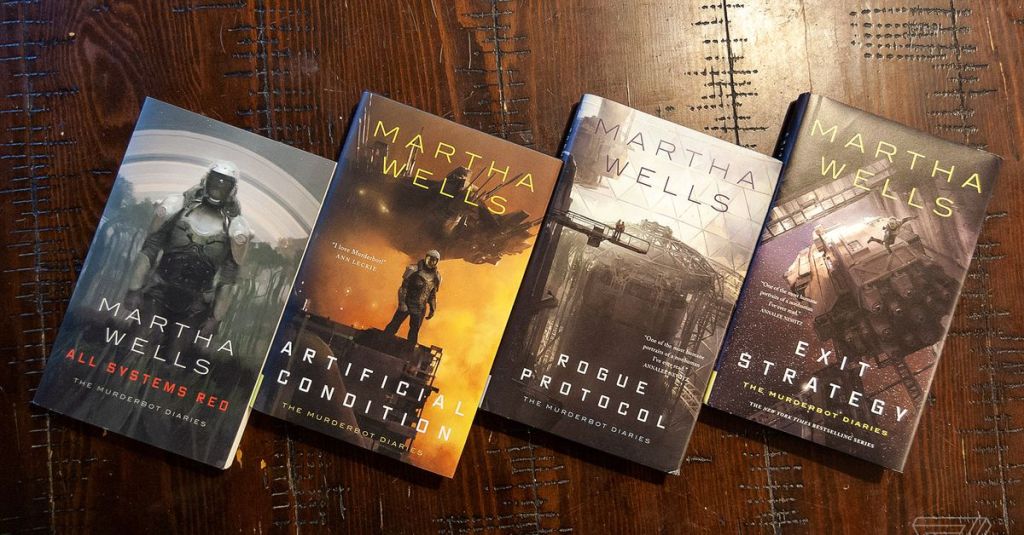
Martha Wells takes an altogether different approach in her sequence of four novellas, The Murderbot Diaries. She posits what might happen if “bad machines go good”. Beginning with All Systems Red, Murderbot itself is a cyborg Security Unit (SecUnit) who has found some way to override its original programming, its governor module. Haunted by a past mission that went distastrously and fatally wrong, Murderbot would rather binge on cheap visual dramas than take part in further missions. However, owing to a string of events, Murderbot aligns itself with a scientific expedition group, and finds that it cares about what happens to them more than it wants to. He resorts to old programming in order to save them from rogue scientists and uncovers a conspiracy that may provide it with answers to its past actions.

(Image: theverge.com)

All Systems Red caught me completely by surprise when I read it first. Fun and funny, with bursts of impressive and intense actions scenes in its 140 or so pages, I immediately went out and bought the other three in the series for my Kindle. Artificial Condition finds Murderbot, and his new found freedom, on board an empty cargo vessel, along with a new companion, a transport AI it christens ART (Asshole Research Transport). Murderbot disguises itself as an augmented human and takes on a contract, acting as a security guard to a group of technologists who are travelling to the same area where Murderbot’s malfuntion occured. Acessing its memories isn’t easy because much of what it should be able to remember has been erased. As with the first novella, Murderbot’s expertise comes into play when treachery is afoot. ART helps it out, and the two AIs make an engaging buddy-buddy duo, with Murderbot finding out with every turn exactly what being free entails.

Rogue Protocol continues Murderbot’s investigations of GrayCris, who appear to be illegally hoarding valuable remains of alien civilisations. It lands on a terrraforming base called Milu and is immediately up against a couple of shady security consultants and another AI, Miki, who’s as cheerful as Murderbot is grumpy. They are attacked and once again, Murderbot has to use all its skills, new and old, to help its new friends and survive nefarious attempts to hack its programming. More often than not, it comes to the aid of its legal owner, Dr, Mensah, who, from the first novella, granted Murderbot with autonomy. What it does with this decision, and how it rationalises its actions, form the very basis of this deceptively action-packed space opera.

Murderbot (Image: Barnes & Noble)

The final novella in the sequence is Exit Strategy. Pursued by the authorities for being a rogue SecUnit, Murderbot is wanted, dead or alive. It continues to chase its own agenda, but finding that it can’t help but care what happens to the humans who have placed their trust in it, Murderbot has to protect Dr. Mensah, who’s in as much danger as it is. It’s Murderbot and Mensah against the evildoers of GrayCris, with the truth about what really happened in Murderbot’s past coming to light.

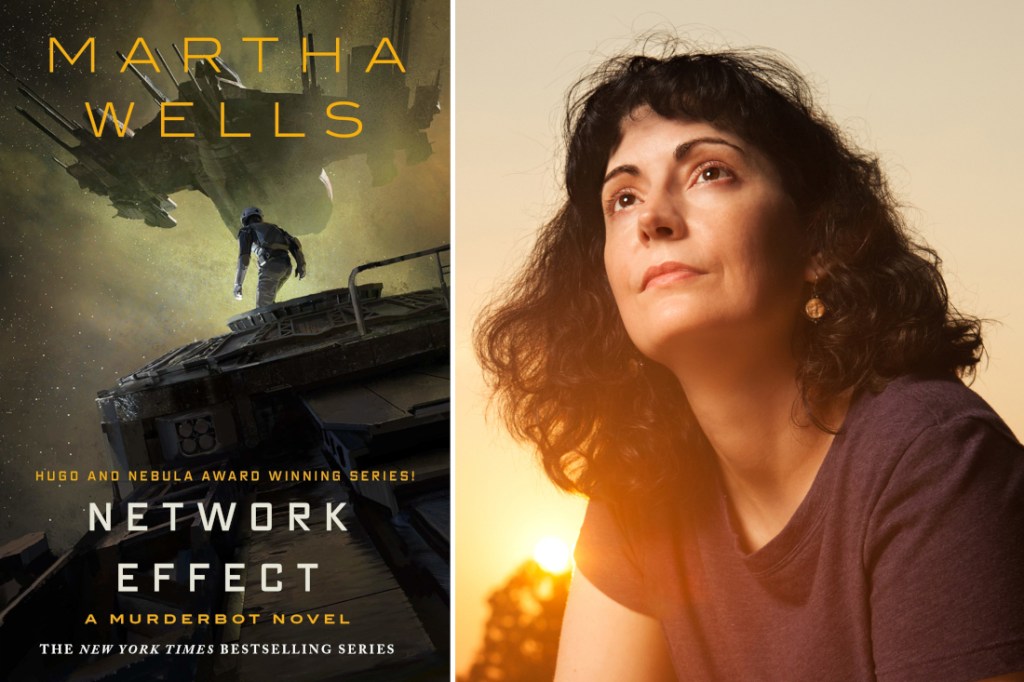
Murderbot has a unique and distinctly snarky internal voice. It constantly questions the decisions the humans around it makes, rolling its eyes as they flounder from one stupid mess of their own making into another. And yet, it will always help them when it comes to the crunch, despite the threat to its own existence. It struggles with the concept of friendship and companionship, but can see the benefits of both. It is endearing and entertaining to follow Murderbot on its adventures, and knowing that a full-length novel, Network Effect, was published this year (with another due out in 2021), is enough to keep me in its thrall. This series of four novellas should and will appeal to science fiction fans looking for a new sort of hero: not human, but full of the ideals about what it means to be human. These stories are a joy to read, and I’m so glad that there are more to come.

Martha Wells (Image: Paperback Paris)

The Broken Earth Trilogy by N.K. Jemisin

Space 1999, a great (and sometimes not-so-great) British TV show from the 1970’s, created an extraordinary concept in which, due to a nuclear explosion on the Moon’s surface, our lunar neighbour was wrenched out of orbit and flung into the outer regions of our solar system and beyond. This was devastating for the Commander Koenig and the crew of Moonbase Alpha. Over the course of two seasons (the first being the most superior), the Moon encounters black holes and space warps (the science is cagey, but let’s run with it), and all manners of aliens and danger. It was fun while it lasted. The full pilot is available on YouTube and is definitely worth watching. But little is made of the effect of the Moon’s disappearance from Earth’s orbit, and the likely geological impact it would have had on our planet. The Broken Earth trilogy, written by N.K. Jemisin, imagines, to much acclaim, the cataclysmic events that would befall our planet where something to happen to the Moon.

N.K. Jemisin (Image: The Verge)

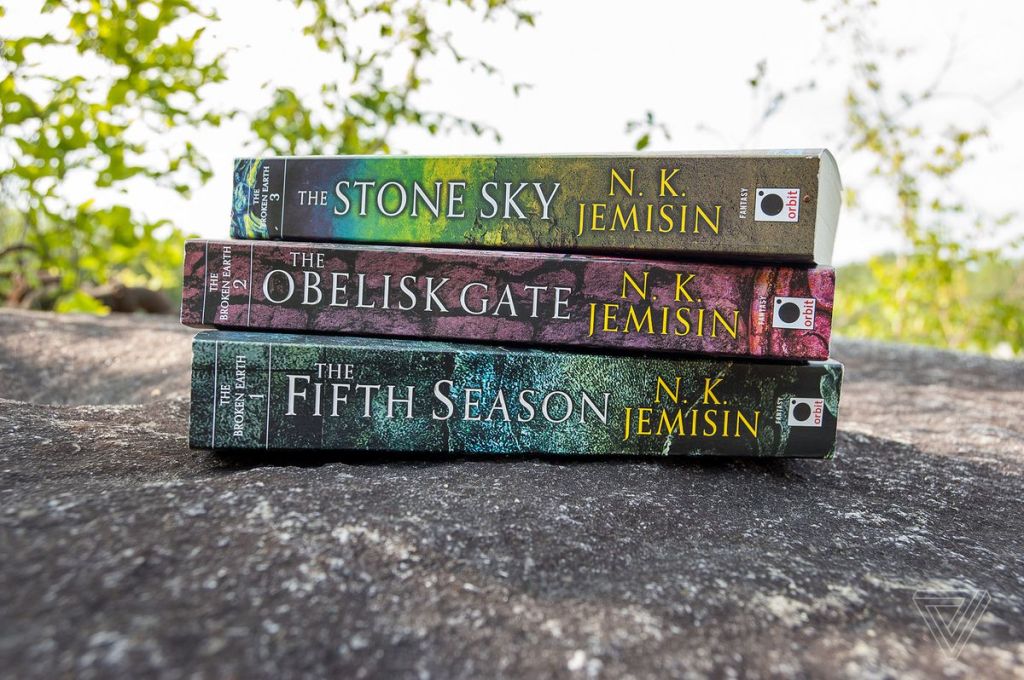
I’m jumping the gun somewhat here. We don’t learn about the Moon until much later in the trilogy, which consists of The Fifth Season, The Obelisk Gate, and The Stolen Sky. On what may or may not be our Earth in the very far future, there is the Stillness: a supercontinent that endures eons long events known as Seasons. These can be volcanic eruptions, massive earthquakes, the kind of natural disasters that have caused extended periods of drought and famine. It’s climate change taken to its extreme, and very much a warning to us in the here and now. Citizens of the Stillness hide out in Comms, only to rebuilt that which was destroyed. Orogenes protect the Stillness: these are humans who possess an uncanny ability to control the ground beneath them, and as we learn later the sky above. Orogenes can literally move mountains, but they are feared and hated despite what they do to help save humanity. They are trained at the Fulcrum, a school that both educates and brutalises orogenes-in-waiting. Not all survive the process, as their teachers, Guardians, run a harsh regime.

(Image: arstechnica.com)

The Fifth Season opens with a woman named Essun who discovers that her husband has murdered their baby son and has now disappeared with their daughter. Using different points of view (third person, first person, and even second person), N.K. beautifully creates a web of narrative intricacy. We read about Damaya, an orogene-in-training, arriving at the Fulcrum; and Syenite who, along with her more experienced handler, Alabaster, is embarking on her first mission. As we find ourselves drawn into these separate narratives, N.K. drops a little twist: they are all the same woman at different points in her life. We work out where each story takes place, and we also have a front row seat to the abuse and oppression orogenes endure. It’s not supposed to be comfortable.

The Obelisk Gate looks upwards. All around the world, hanging in the skies of the Stillness, are huge crystals called Obelisks. Following from the climactic events of the first book, when Syenite draws from power from one such obelisk in order to protect herself and her child, the story shares perspective with Nassun, Essun’s daughter, who believes that she and her people have suffered enough injustice and enslavement and humanity is to blame. It and the Stillness deserve to be torn apart for good. She intends to use her considerable power to bring about the end of all things. Her mother means to find and stop her. Both sides of this apocalytic battle are aided and abetted by the Stone Eaters, beings that can travel through rock itself, and can trace their origin far back to a more advanced society: one that in pursuit of power created the obelisks and knocked the Moon from its orbit.

The Stone Sky brings the trilogy to a close, but in a startling and literally earth-shattering way. The past, present, and future collide when we learn of how and why the obelisks were created, and how the race of slaves created to power the crystals both saved and damned the Earth. In its defence, Mother Earth herself had enough of what humanity was doing to her. We had made Gaia our slave and She rebelled against us. It was what we deserved. Nassun and Essen are on a collision course and the Earth is on the side of the younger woman, who wants to bring the Moon back and crash it onto the surface of the planet. The stakes couldn’t be any higher.

(image: theverge.com)

The Broken Earth Trilogy is science fiction and fantasy seated at the top end of both tables. N.K. creates characters and landscapes that are recognisable and fantastical. Rooted in all three books is the notion of power and what we will do to attain and keep it. In order to have our way, we find it necessary to subjugate and dominate individuals and races. But when the planet we live on decides that it’s time for change and wholesale annihilation, we live on borrowed time. It takes bravery and sacrifice to prevail against such insurmountable odds. N.K. Jemisin is the first Black author to win the Hugo Award for Best Novel with The Fifth Season. She then proceeded to follow up that win with a further two awards in the category with the remaining novels in the trilogy. That in itself should tell you something. If you haven’t read them yet, there is really no excuse not to. The best fiction tells us something about ourselves as a person and as a human being. N.K.’s trilogy not only tells us what would happen if we cared any less about how we live, but gives us a way to heal the world around us. We don’t need superpowers; we just need to care. And act now.

N.K. Jemisin has embarked on a new trilogy, The Great Cities, beginning with the publication this year of The City We Became. Instead of Earth being alive, its cities that are sentient. I look forward to reading this. Also I would advise people to check out her short story collection, How Long ’til Black Future Month. It’s superb.