Tag Archives: Books

The Reincarnationist Papers by D. Eric Maikranz

In July of last year million of us around the globe sat down to watch the latest hit movie to come from Netflix. The Old Guard starred Charlize Theron as Andromache (Andy) of Scythia, one of a group of near immortal beings, masquerading among us mere humans as soldiers of fortune, mercenaries travelling the globe taking on causes to help humanity. It was as action-packed as it was thought-provoking, drawing on the myth, and sometimes the hope, that gods live alongside us.

In 2009, author D. Eric Maikranz self-published his debut novel, The Reincarnationist Papers, urging his readers to act as agents and promote his book to Hollywood movie producers. Fast forward to this year, 2021, Infinite, directed by Antoine Fuqua and starring Mark Wahlberg, based on Maikranz’s novel, is scheduled for release in September. I’m really looking forward to the forthcoming adaptation, because this book is really good.

Like The Old Guard, The Reincarnationist Papers tells the story of a group of people who live forever. Unlike the heroes of Theron’s movie, the characters in Maikranz’s book age and die naturally. Some die by other means, but in the main, when their bodies die, their souls are reincarnated into another newborn body. The concept behind this is, I think, we all reincarnate but only a very, very small number of us remember our previous lives. This is what happens to the main character, Evan Michaels, who from an early age can recall two previous lives: a Bulgarian who fought in World War I; and a young boy from Georgia in the United States who died in a fire. Needless to say, these memories mess him up and when we meet Evan, he’s a professional arsonist, making money from people defrauding insurance companies, and contemplating suicide. When a job threatens to go south on him, he’s rescued by Poppy, a mysterious woman who lives with her servant in an abandoned church. She nurses Evan back to health and tells him a story he doesn’t quite understand but nevertheless is close to believing.

D. Eric Maikranz

Poppy is one of an elite group of 27 people who can remember their previous lives. She is convinced that Evan is another reincarnated soul, but he must meet the other members and prove his worthiness through a trial known as Ascension. The book then takes Evan and the reader on a journey through time and memory. Maikranz backs up his main story with plenty of thought-provoking and philosophical discussion about life without death. I found these sections fascinating and important to the story as a whole. Peppered throughout are narratives about Evan’s and Poppy’s previous lives. We learn more about most of the other members of the Cognomina (the name they give themselves), who meet up in Zurich every year on Midsummer’s Day. They are rich beyond comprension and Evan wants –needs — to be part of this family.

My favourite characters are Samas, an art collector who has his own agenda for Evan; and Poppy herself, who is mercurial and not altogether trustworthy. These beings, despite being long-lived, have human needs and traits, and each of them has a backstory that could fill another book or two in this series. Maikranz has a second book coming out in the near future, too, thank goodness: Evan and his new family practically demand it.

Also available from the author is a free-to-read origin prequel, which serves as an interesting prologue to the main book. I recommend you read this first, though it’s not a prequisite. D. Eric Maikranz has written a little beauty here, full of great characters and excellent story-telling. If you have the slightest interest in life and rebirth, I don’t hesitate in asking you to read The Reincarnationist Papers. Don’t wait for the movie.

Remote Control by Nnedi Okorafor

A book that has stayed with me years after I read it is called Who Fears Death. Published in 2010, it was written by Nnedi Okorafor, a multiple award-winning author born in the United States to Igbo Nigerian parents. It’s an amazing work of what she describes as Africanfuturism. In an essay Dr Okorafor penned in 2019, she defined the term as a sub-category of science-fiction that is “rooted in African culture, history, mythology, and point of view that does not centre on the West or Western privilege.” It is an essay worth reading in its entirety, because it offers a unique and profound insight into the works of this brilliant author, who not only writes for adults, but for younger readers, too.

Remote Control, by Nnedi Okorafor (Image: tinhouse.com)

Who Fears Death is set in post-apocalyptic Sudan. Dr Okorafor’s Binti trilogy has as its main character a girl who’s part of Himba ethnic group in Namibia. In Remote Control, Fatima is Ghanaian. She lives with her parents on a farm in the village of Wulugu. Despite being plagued by malaria for much of her young life, Fatima is happy. Her grandmother encourages her to look to the stars, and she develops a language all of her own, one she calls “sky words”, which she uses to draw pictures on the ground beneath her favourite shea tree. One night, after a meteor storm, a wooden box appears from under the ground. In it is a seed that, to Fatima, looks like an egg. This seed has unexplained mystical properties, and following an unannounced visit by a local politician, the box is taken away from her. This event unleashes a lethal force from within Fatima, which kills not only her parents, but everyone in the village. The force is so great that it makes Fatima forget her own name, so she adopts a new one. She is now Sankova, and along with a fox she christens Movenpick (after a hotel chain), she goes in seach of that which was taken away from her.

Sankova’s power makes her infamous. Both feared and respected, this young girl, not even in her teens when the incident happened, is clothed, fed, and allowed to rest on every stage of her journey. Occasionally she helps those who come to her aid, using her power to kill to end the suffering of people who are terminally ill. But her power forbids her to touch or use anything electrical or mechanical. She is forced to walk wherever she goes. Along the way she meets people who genuinely want to help her settle, as well as those who want to kill her. It ends badly for the latter, it has to be said. Sankova learns to control her glow, earning the nickname of “Remote Control.” Her fox is always nearby.

(image: c/o Twitter)

Events in the village of RoboTown, and an encounter with an automated traffic control system, called robocop, forms the main thrust of a novella that is essentially episodic in nature. Knowing that she is being monitored by an American corporation, LifeGen, Sankova makes the decision to return home, to where it all began.

Dr Okorafor’s writing is as evocative as ever, and Remote Control hit me with the same punch as her other books. But there’s a difference. In Who Fears Death and Binti, Nnedi’s characters have agency when it comes to their powers and gifts. They knew where it came from and knew, largely, what to do with them. Here, Sankova hasn’t the same advantage for much of the story. She’s lost her identity; she’s lost her family; and she has a power that’s pretty much a curse if you were to look at it closely. And there are those who wish to use Sankova for their own agenda. It’s this last part that brings the novella to a close. What is Sankova to do? You will have to read Remote Control to find out. Published in January of this year, by Tor, I politely request that you visit the world and work of Dr Nnedi Okorafor.

The Count of Monte Cristo: Chapters 13-17

Read the previous instalment here.

These next four chapters lay the trail for Edmond Dantes eventual escape from the Chateau d’If. This is an important section for the book because, away from the political to-and-fro of early 19th century French history, we get to spend a decent amount of time with Dantes and his new-found friend and spiritual adviser, the Abbe Faria, the ‘Learned Italian’.

Napoleon has been banished once more, and Louis XVIII has been restored to the throne. No better time for the inspector-general of prisons to do his rounds and see how things are with the inmates of the lonely island Dantes calls home. Dantes spies an opportunity to appeal to the man who, in all fairness, sees no reason why Dantes should even be in prison. Having listened to his pleas, the inspector-general promises the innocent man that he will look into his case. Dantes feels hope at last, thinking that de Villefort’s notes will save him. However, the opposite happens. Conspiracy runs deep and the prosecutor’s lies, and his desire to hide his own relationship with Noirtier further damn Dantes’ claim to be released. There is nothing the inspector-general can do.

Nor is there anything he can do with the other prisoner he visits, the seemingly mad Italian Abbe Faria, who promises the inspector-general untold wealth if his release can be secured. Faria has a treasure buried somewhere and he’s willing to part with most of it if his pleas are met. The governor and inspector-general think him mad and leave him to rot away. Prisoners 27 (Faria) and 27 (Dantes) are left to fend for themselves.

Dantes falls into deep despair, at one point threatening to starve himself to death, such is his plight. His prayers to God go unheeded; and he’s oblivious to the fact that other people who were close to him put him where he is now. But when he hears a noise coming from the other side of his cell, he tricks his jailer into leaving his dinner pot behind and starts scratching away at the sound. Then he hears a voice. After some time and much scraping away at the wall, he meets his neighbour, who turns out to be the Abbe Faria, who comes into Dantes’ cell.

Far from being mad, as his jailers deem him to be, Faria is a resourceful man. Imprisoned because of his belief in a unified Italy, Faria is a polymath who becomes Dantes’ tutor in the years they spend together. He teached Dantes other languages and soon enough Dantes, an intelligent if naive man, quickly learns the basics in Italian and English. Faria also proves to Dantes that Caderousse, Fernand, and Danglars were the men behind his captivity. Dantes swears revenge. Together they hatch a plan to escape. Faria, much to his own despair, works out that he’s been digging in the wrong direction. So, between planning another route, and learning mathematics and philosophy, the two men bond over a mutual need for freedom.

Before their plan can come to fruition, though, the abbe has an epileptic fit. The man knows he’s on limited time, with an arm and a leg becoming paralyzed. Dantes swears to not leave his friend while he’s alive.

The Eddie Flynn Series by Steve Cavanagh

I was brought up on crime thrillers. Nothing excited me more than watching the good guys catch the bad guys, and getting them put away for murder and fraud. I also enjoyed thrillers where an innocent person needed help to clear their name. I watched old shows like Petrocelli, where a low-key defence attorney who lived in a trailer used his skills and intellect to get his clients cleared of crimes they did not commit. (Occasionally he got it wrong, but he always stuck to the law.)

Modern shows like Law & Order, in all its incarnations, focus on both law enforcement and criminal justice, and are equally compelling in presenting the thrills and spills of the legal system. It’s deeply flawed nationally and internationally, but when it comes to fiction writing, the genre lends itself to providing many, many hours of entertainment. The current HBO show, Perry Mason, is testament to how popular crime and courtroom dramas are and will remain.

Belfast native Steve Cavanagh is a writer who’s currently riding high on the success of a series of electric and exciting novels about New York lawyer Eddie Flynn. To say Eddie is offbeat and eccentric is to do an injustice to a man who uses every trick in the book and under his sleeve to win a case, normally at great cost to himself and those around him. A former con-man and street hustler, Eddie was driven to use his skills in misdirection to help his mother during a medical insurance case.

The first novel proper in the series is The Defence. Eddie’s personal life is a mess, and he’s lost his way in life, but he’s dragged back into court with a bomb strapped to his body, and his daughter’s life in danger. Forced to defend the head of the Russian Mafia in New York, Eddie is in a literal race against time. And did I mention he’s also got a drinking problem? All of this in the first couple of chapters, too. Cavanagh wastes little time on the niceties, and we’re all the better for it. Of course, Eddie realises that no matter what he does, he’s toast, just like his former partner. So he draws on his experience on the streets and in the courtroom, and with the help of a friendly judge, uses the 48 hours he’s been given to turn the tables on his new employers. The book is high-octane, a page turner, and Eddie has always one more trick to play. The pace never lags.

Steve Cavanagh (Credit: Kelly M Photography)

After finishing The Defence, I picked up the other four available books in the series. In The Plea, the FBI and CIA blackmail Eddie into defending a client who’s been accused of murdering his girlfriend. The agencies want Eddie to get the accused man to admit his guilt and take a plea. But Eddie knows there’s more going on. In order to protect his estranged wife, who’s unknowingly tied to a money laundering scheme, he has to go head-to-head with a highly ambitious district attorney who looks down on Eddie as being unworthy of his time. This is another excellent thriller, and Cavanagh lays on the surprises and twists with dexterity.

The Liar continues the trend, with another serpentine story involving Eddie defending an acquaintance from his younger days who’s been charged with the kidnapping and murder of his own daughter. Convinced of his friend’s innocence, Eddie works the case while also helping out the friendly judge, Harry Ford, whose career is in jeopardy due to another lawyer who has demanded the release of casework on a trial the judge was working on. The Liar introduces Agent Harper of the FBI, who eventually works side-by-side with Eddie as the twists come chapter after chapter. Both plots are connected and Eddie and co. have to find out how.

My persona favourite of the series is Thirteen. Eddie is at the centre of the celebrity murder trial of the century. Bobbie Solomon, a movie star, is charged with the murders of his wife and security guard, and Eddie takes on his defence. The twist in this book is that a serial killer, known only as Kane, has found their way onto the jury. This is a premise that can only come from the mind of Steve Cavanagh. There are echoes, however faint, of John Grisham here, but Cavanagh takes his level of plotting to another universe. He mixes the chapters with first person narrative from Eddie himself, and the sinister voice of the killer. The clues as to who this person is are laid out throughout the book, so that when the big reveal comes, we’re not tricked. Bamboozled, stunned, yes; but not taken for fools. Thirteen is glorious.

The last (for now) is Fifty-Fifty, the premise of which is deceptively simple. Two sisters, Alexandra and Sofia Avellino, are accused of the murder of their father. Each blames the other for the crime. At the centre is a $44,000,000 inheritance. The sister found innocent will get the lot. The other goes to prison for life. Eddie represents Sofia, while another lawyer, Kate Brooks represents Alexandra. As in the previous novel, the guilty party, ‘She’, gets chapters to herself. So which of the two lawyers is on the winning side? Cavanagh once again piles layers upon layers of twists, surprises, intrigues, and a shocking death midway through adds to the punchy storyline.

I am in awe of Steve Cavanagh. From the first book till now, with a new one due out hopefully this year, I haven’t read anything near as compulsive and propulsive as the Eddie Flynn novels. He leaves the likes of Grisham and co. for dust.

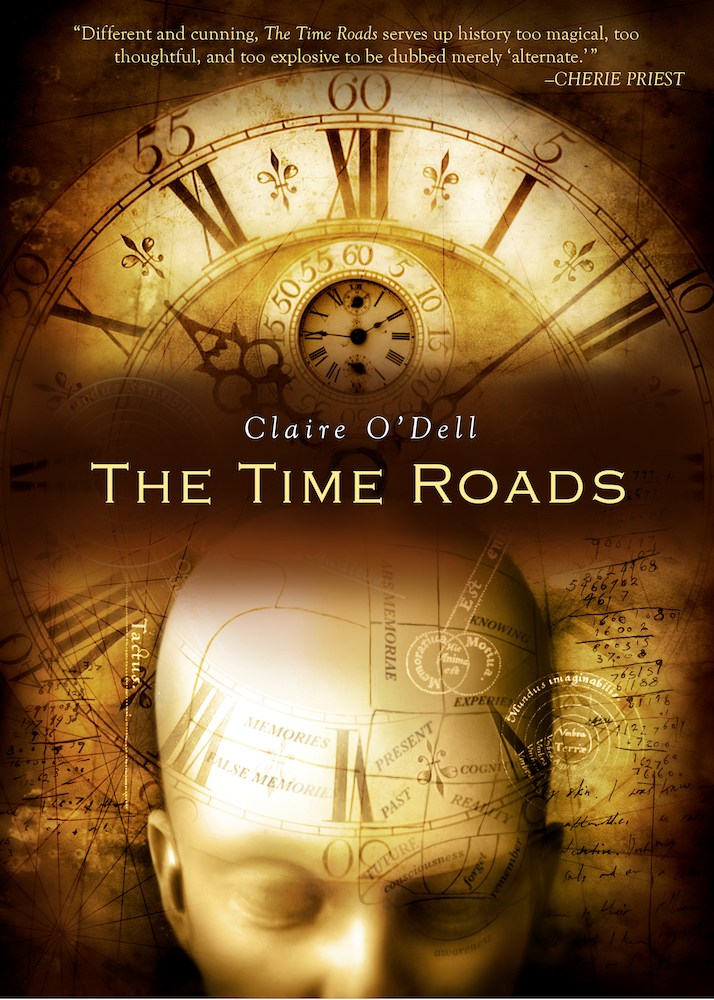
The Time Roads by Claire O’Dell

Claire O’Dell says that The Time Roads is a story about murder, mathematics, and time. It is, but it’s also a deft, complex, and at times explosive political thriller, with characters that are well-drawn, intriguing, and who seek to understand the truth about the world they live in.

Eire is the country of my birth. You will know it as Ireland, a small island nation whose nearest neighbour, the United Kingdom of Great Britain and Northern Ireland, has a rather fractious history with it. Ireland spent generations fighting for its independence from its British masters, ultimately gaining sovereignty through a series of rebellions, a civil war, and then political agreement which resulted in the six counties of Northern Ireland remaining under British control. This divide continues to have repercussions in this new Brexit era.

But what if none of this happened? What if Eire was the dominant force in Europe, and the Anglian Dependencies sought independence for themselves? Claire O’Dell creates such a world. Alba (Scotland) is independent, but Anglia, Cymru, Manx, and Wight are subjects to Queen Aine Lasairiona Devereaux and her court of Lords at Cill Cannig, where the kings and queens of Eire had lived for six centuries. It’s a marvellous concept, one I found so intriguing that I had to get a copy to read for myself. I love speculative fiction that takes in alternate history.

Aine takes the throne after her father, the king, passes away suddenly. She is young, idealistic, and looks to a future where there is a league of nations, where there is peace and prosperity. But not every nation is willing to be part of this prototype U.N, though. There are anarchists in Europe who are willing to fracture time itself to stop this from happening. This happens because, at the start of the book, Aine funds the research of a scientist, Breandan O’Cuilinn, who has found a way to move objects into the future. There is a spark of romance between Aine and Breandan, further complicated by the arrival of Commander Aidrean O Deaghaidh, a former spy who’s now enlisted in the queen’s Constabulary, the Garda. There is a hint of a love triangle, but following a series of gruesome murders, and a tragic death, the story goes down a couple of roads that are literally fractures in time.

Claire 0’Dell

The Time Roads consists of four interlinked novellas, set years apart from one another. The Golden Octopus focuses on events in November 1897, which I have related in previous paragraph. We meet Aine, Breandan, Aidrean, and the many lords who make up the queen’s parliament of advisers. The second novella, A Flight of Numbers Fantastique Strange, is set in September 1902, and this is where the tale becomes more complex. We meet Siomon Madoc, a student of mathematics at Awveline University, whose sister Gwen is a resident at a sanitorium and does nothing all day but reel out sequences of prime numbers. Murders occur, or do they? Aidrean is investigating, but things are not what they seem. Time itself if fracturing.

The third novella, Ars Memoriae, is a good old-fashioned spy story, with Aidrean going undercover in eastern Europe, at great danger to his physical and mental well-being, as he attempts to root out anarchists and traitors to the cause. The book concludes with a section called The Time Roads, where Aine and Aidrean must confront a future that cannot be allowed to happen. It’s 1914 now, and the queen is older and wiser, and knows she has to stop a war that would destroy all she holds dear. She must travel along the time roads themselves.

As I wrote earlier, this is a complex story, one that held my attention from the first page. Claire O’Dell does some great world-building here, and while I would have liked to know more about this Europe and its nations of Frankonia, Prussia, the Turkish States, as well as the new world of Mexica, what information she gives to move her story along serves its purpose. There is a grander story taking place in this world, and Eire is at the centre of is. Being Irish myself, this is as it should be.

Previously published in 2014, writing as Beth Bernobich, Claire O’Dell repackaged The Time Roads for Kindle recently. It’s definitely worth reading, and taking your time as you do. There’s a lot going on, and at times you might find yourself puzzled by what’s going on. But rest assured, while not all answers are forthcoming, the resolution is gratifying and uplifting. Time can be our enemy, but if we use it wisely, it can be our greatest ally.

The Count of Monte Cristo: Chapters 9 – 13

Chapters 5-8 can be found here.

These next few chapters are light on Edmond Dantes. Following his illegal incarceration on the island of Chateau d’If, the narrative focuses on Villefort’s efforts to protect his good name, while also moving with the tide. If the king is in power, he wants to remain in His Grace’s good grace. If Bonaparte took over, Villefort would then use his own father’s influence to stay out of harm’s way. There’s a lot of politics and French military history in these five chapters, and they set the scene for what comes later in the novel.

Louis XVIII, King of France, is returned to his rightful place following Napoleon Bonaparte’s exile to Elba. But what he’s about to find out from Villefort, who has urgently requested a meeting with the king, will shake him to his core. Napoleon has escaped from captivity just as the two men meet. Villefort uses the information he got from Dantes, an innocent man, to win favour with the king, who awards him with the Legion of Honour. The chief of police isn’t impressed, and finds himself soon out of a job. Villefort knows that he can play both sides.

Meanwhile, Villefort’s father, Noirtier, visits his son, aware that he’s wanted in connection with the assassination of a royalist general. Noirtier changes his appearance, telling Villefort that Napoleon is once again emperor-in-waiting. He has a huge following in France regardless of his exile.

The Hundred Days War soon follows. Louis XVIII is deposed, Napoleon has control over France, and calamity ensues. The Battle of Waterloo seals Napoleon’s fate once more. But before all of this, M. Morrel seeks to have Dantes released from prison. While Napoleon is in power, the ship-owner asks Villefort to intercede with the emperor on Dantes’ behalf. Villefort, the coward that he is, shrugs him off with vague promises. The other co-conspirators deal with the changing political landscape in their own way. Fernand still hopes to win Mercedes’ hand, but joins Napoleon’s forces. Danglars leaves for Madrid. Caderousse remains where he is, ruined and ruled by jealousy, drinking away like nothing else matters in life. Dantes’ poor father dies destitute and in misery. M. Morrel pays for his funeral.

And so ends what is, for me, the first part of the novel. Dumas has placed his characters all across France and Spain. The scene is set for Dantes’ impending escape and plans for revenge.

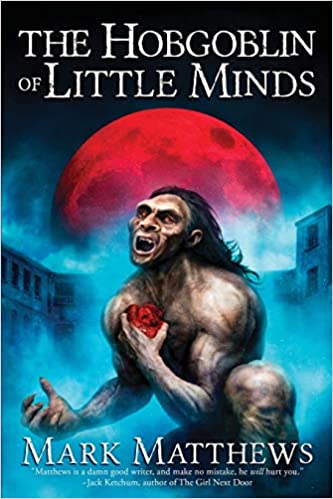
The Hobgoblin of Little Minds by Mark Matthews

NetGalley and the publishers provided me with an ARC in exchange for an honest review.

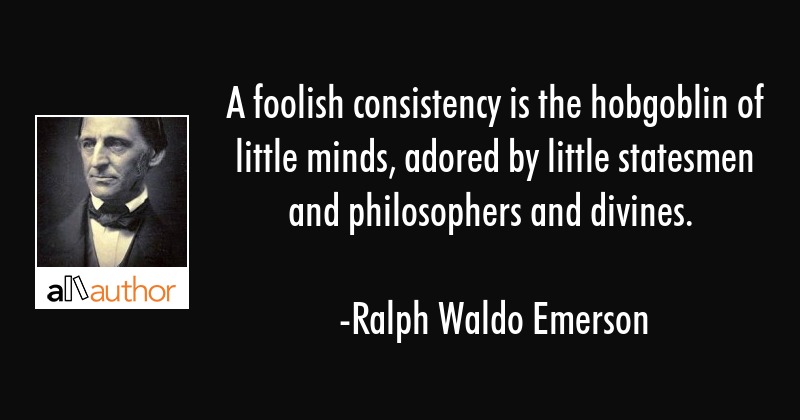
The first thing — the very first thing — that struck me about The Hobgoblin of Little Minds, before I even started reading it, before I even looked at the cover or researched the author Mark Matthews, was its title. The phrase is mentioned quite a few times in the text, and it is by no means a throwaway title. It means something to every character in this engrossing horror novel. It was coined by the poet, essayist, and philosopher Ralph Waldo Emerson, taken from his 1841 essay Self Reliance. In it, Emerson states that “foolish consistency is the hobgoblin of little minds, adored by little statesmen and philosophers and divines.” A quick search on the internet explains this in layman’s terms for me: basically saying that just because you’ve thought the same thing for most of your life, or performed the same actions, it doesn’t absolve you of the importance of critical thinking, and the necessity of changing your mind and opinion when better information comes to light. (Sounds like a lot of politicians could use this advice here, but we won’t go there.)

Emerson’s metaphor takes on new life (literally) during the course of this novel. Told in a somewhat non-linear way, beginning in 2002 and ending in 2018, The Hobgoblin of Little Minds centres around five main characters. Kori Persephone Driscoe, who’s father Peter has been in and out of psychiatric institutions, serves as our introduction to Mr Matthew’s insane and dangerous world. Kori’s mother is about to hightail it out of Detroit and set up home with her new partner in Florida. Kori doesn’t want to go, and instead visits the hospital where she last saw her father. Anyone from Detroit will be familiar with Northville Psychiatric Hospital in Northville Township,Wayne County, and former Governer Engler’s closure of the hospital for economic reasons. Patients and staff were moved on elsewhere. Kori visits the abandoned building, already the subject of blogs and videos which suggest it’s haunted, and finds that nothing is what it seems anymore.

Peter has been the subject of genetic medical experiments by his doctor, the mysterious Dr Ziti. She is an expert in mental illness, and because of her own family trauma as well as a God Complex, she invents a pharmaceutical that she hopes will harness Peter’s bipolar disorder into something she can use. Basically she Dr Frankenstein, Psychiatrist. But Peter isn’t her first attempt at harnessing this disorder. Her previous failed attempts are chained up in the tunnels under the hospital, and when Kori finds them and her father, the narrative takes a number of strange and disturbing detours.

Maya, a Black woman, traumatised by her mother’s suicide, and subjected to heinous treatment by her local pastor, lands on Dr Ziti’s doorstep, and is partnered up with Peter in a bizzare and horrifying experiment; the result of which is the book’s fifth character, whom I will leave for you to find out more about. I’ve gone far enough into spoilery territory, and wish to go no further.

Mark Matthews

Over the last few years or so, there has been a plethora of vampire and zombie novels, movies, and television shows, but few if any on what we call werewolves. I want to point out that Mr Matthew’s monsters aren’t classic werewolves in the Lon Chaney, jr. vein; they are their own creation, but follow similar patterns of behaviour. The Hobgoblin of Little Minds is as much about how mental illness affects the families of those who endure bipolar disorder as it is about the victims of this illness themselves. Dr Ziti sees that classic attempts to treat sufferers of bipolar disorder don’t work anymore and that it’s time for something new, something extreme. She sees the foolish consistencies of those in the field who preceeded her. But she has an agenda of her own, a deeply personal one.

The Hobgoblins of Little Minds is at times a violent novel. There is one scene that literally had me crossing my legs, but the victim in question deserved their end. Hat’s off to the author, though, who had me enthralled from the first page, and I finished the novel over two nights. (This is a book to read in the dark, trust me.) It’s the terrifying offspring of Mary Shelley’s Frankenstein and H.G. Well’s The Island of Doctor Moreau. It also raises questions on medical ethics, and how it can be that sometimes the people we trust to help us won’t always have our best interests in mind: which is something equally as terror-inducing as anything you’ll read in these pages.

Northville Psychiatric Hospital: source MLive.org)

It’s worth reading the author’s Afterword at the end of the book. Mark Matthews offers us his experience in the field of mental illness and treatment and how he came about to write his book. I found this very informative. If you want to learn more about Northville Psychiatric Hospital, you can check out the links here and here.

The Count of Monte Cristo: Chapters 1-4

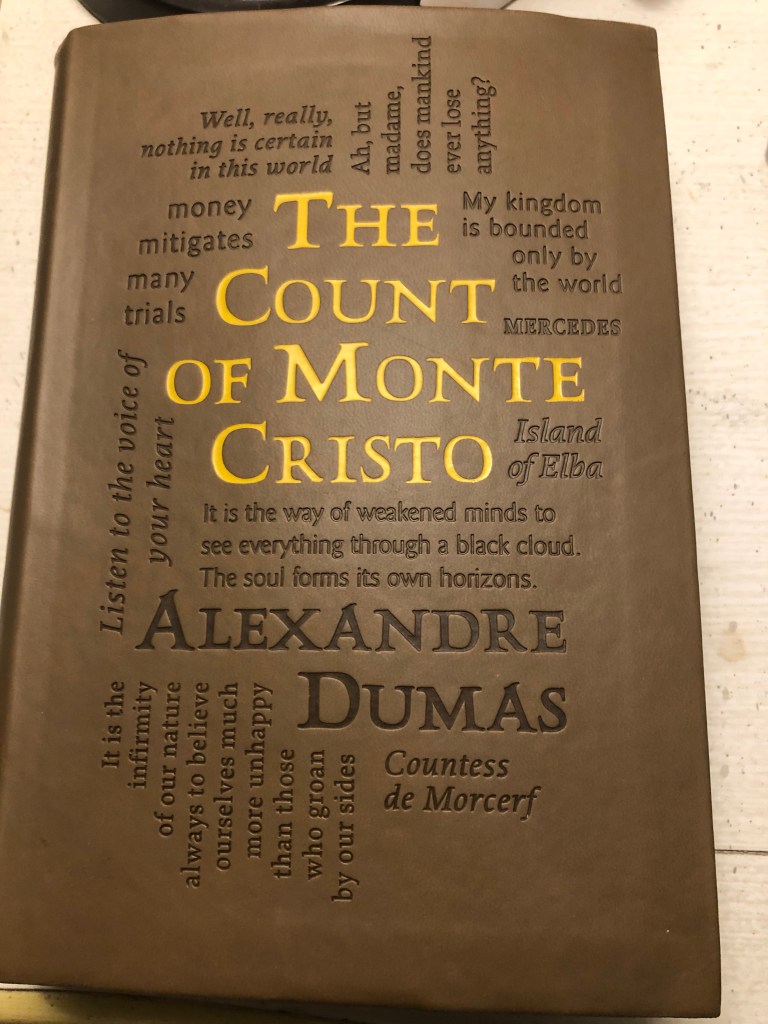
Greetings, dear reader. I wrote in a previous blog that it was my plan to read Alexandre Dumas pere‘s classic adventure novel The Count of Monte Cristo over the course of the next couple of months, taking it three or four chapters at a time. Well, the time has come. Today, I will focus on the opening four chapters of this mammoth 118 chapter long novel. As stated earler, the edition I’m reading from Canterbury Classics, and was published in 2013. I picked it up from Amazon before Christmas for about $15. It has a soft faux-leather cover, and it’s pretty.

The story begins on the morning of February 24, 1815. The date itself is important for historical reasons, but it’s not yet apparent to the characters we meet in these initial chapters why this is. Edmond Dantes disembarks the merchant ship Pharaon at Marseilles. He’s had an eventful journey which took in unscheduled stops at the islands of Monte Cristo and, more importantly for the story, Elba, where a certain former emperor of France lies in exile. Dantes lands there because his fatally ill captain, Leclere, wishes to deliver a package to Napoleon’s marshall. In return he is to take a letter to Paris. Dantes, out of fealty to his captain, agrees to continue this mission when Leclere passes away from a brain fever. Dantes is a good man, but he doesn’t ask the obvious question, and this lands him in huge trouble on home soil.

In double quick time, we meet the Conspirators, and their individual reasons for wanting Dantes out of their lives. Because Dantes acquitted himself well when his captain died (he’s the ship’s mate when we’re introduced to him), his employer wants to make him captain. For one so young (Dantes is barely in his twenties), this is a dream come true. M. Danglars, the supercargo (representative of the owner on board the Pharaon), took a dislike to Dantes from the off and is none too pleased about this rapid promotion. When Dantes goes to see his elderly father, he is horrified to find out that the money he left with his dad to take care of himself while Dantes was at sea, was given instead to their neighbour Caderousse, a drunkard, because of a debt he and Dantes had. The elder Dantes was forced to live on 60 francs for three months. There’s not even a bottle of wine in the house. When Caderousse finds out that Edmond is back, he sees another opportunity to squeeze the man and his father for more money.

Edmond is still unaware of how his return to land and his apparent rise up the ranks sits badly with some of the men around him. No sooner has he said hi to his dad, he’s away to Catalan to meet up with the love of his life, Mercedes Herrera. Unfortunately for Edmond, he has a rival for the young woman’s affections, her cousin Fernand Mondego. He urges Mercedes not to marry outside her Catalan community, but she’s not having it. She practically falls into Edmond’s arms when he interrupts their awkward conversation. Mercedes expects the two men to become fast friends, but neither men like the cut of the other’s jib (and that’s putting it mildly).

As Edmond and Mercedes look at each other all doe-eyed and begin planning a quick wedding, Fernand, Caderousse, and Danglars drown their collective sorrows over several bottles of wine at a nearby tavern. So how do they solve a problem like Dantes? Simple: they plan to set him up. They realise killing him is out of the question because Mercedes implies that if anything were to happen to Edmond, she would take her own life. Danglars forges a letter to the king’s attorney, telling of Edmond’s planned trip to Paris to deliver a letter on behalf of the usurped emperor. Fernand takes the letter and heads off to the capital, ready to accuse the young man of treason.

So we’re off to a flying start, and we’re only 28 pages in. Dumas wastes very little time in setting up his tale of adventure, betrayal, and revenge. We know Edmond is in for a boat-load of trouble, and we’re unable to warn him and Mercedes. The plot is afoot, and the next few chapters await us.

2020 and All That.

2020 has been the most challenging year many of us have ever faced. Even if we haven’t lost someone close to us, we know someone or a family who has. It’s been a lot. But while the new year won’t bring us a hallelujah moment immediately, it’s important to note that although the light at the end of the tunnel is still far away, we’re moving ever closer to it. We still have to take care of ourselves and those around us, and not do anything silly that could jeopardise our futures.

I’m not going to get all introspective. We each have our own stories to tell about year about to pass, some more heart-breaking than others. But we’re still here. We survived so far. And 2021 is right around the corner.

I’m not one for New Year Resolutions. In fact I got very little done during the year, and it was only in the last month that I put myself in front of my laptop and created this blog. I count that as a win. I read plenty of books, and my TBR pile is gargantuan. But I’ll get through most of them.

Authors and their agents have begun emailing me and DMing me on Twitter, politely requesting reviews for their currently published and upcoming books. I’m cockahoop with joy about this. I intend to get through as many as I can, taking into account I’ve got my own stuff to do this year. (Yes, 2021 will be the year I finish my own novel’s first and, if I’m diligent, second draft of the novel that’s been in my head and computer for years.) I owe it to myself to do this. So, I’ve plenty to look forward to. I think we all need a goal for 2021, even if that goal is personal rather than professional.

I hope that we can, sometime in 2021, go see a movie, eat out at restaurants, and be close to family and friends. We’re human, and there’s nothing more human than being around other people who make us feel good. A lot of us haven’t seen our parents, grandparents, andsignificant others for a long time. But we need to hold out just a little while longer. The wait, I know, will be worth it. We have to do better for ourselves and each other. Also we need to be kind to ourselves and each other. Events of the last year have changed us: it is my hope that they’ve changed us for the better. Time will tell.

So, for my part, I will continue to read, write, and take better care of myself. I have a feeling 2021 will be a banner year for me and the people I love and care about. Let each of us do our part. Live. Learn. Love. Read. Listen to music. Dance and sing. Let us be responsible. Let us welcome in 2021 with hope, but never forget the lessons of 2020.

Happy New Year to you and yours. I’ll see you on the other side for more book reviews, book-related essays, and of course, my attempt to read The Count of Monte Cristo a few chapters at a time. Stay tuned.

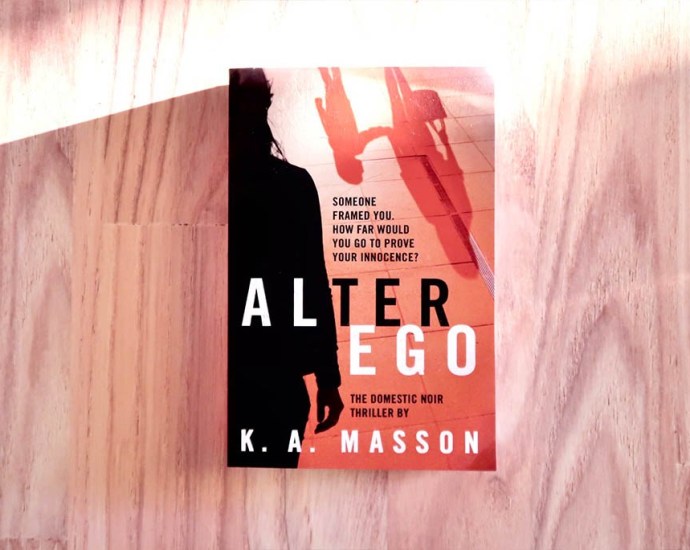
Alter Ego by K.A. Masson

Any book that name checks Matt Johnson’s The The, and in particular Uncertain Smile, has got to have a lot of things going for it, right? In fact, this book, Alter Ego, the debut thriller from English writer K.A. Masson, is peppered with plenty of musical references throughout its taut narrative, with two of the story’s main characters at one point going through their Spotify playlists and cranking out some banging tunes, with no decade being left out. But it was the The The reference that sat with me. I haven’t listened to this band for some time, and when I’m done writing this review, I will queue up Soul Mining and get all nostalgic.

(Image: heyitscarlyrae.com)

Alexandra (Alex) Kendrew is a single mother who lives with her young son Ned in suburban London. Estranged from the boy’s father Sean for some time when the novel begins, Alex trawls dating websites looking for love and someone to settle down with. She’s a freelance photographer who juggles her professional and personal life, and during the course of the story, drops balls on a regular basis. Some of her friends question her lifestyle choices and parenting skills, but Alex knows what she’s doing.

Or does she?

When Alter Ego begins, Alex is arrested for the attempted murder of her boyfriend Mal Russell, who was brutally stabbed the night before in the flat he shares with a friend. Alex has been identified by said friend as the woman who she admitted to the flat and subsequently stabbed Mal. Alex doesn’t believe what’s happened to her. There is no way she could’ve done what she’s accused of. She was at home with Ned. The detectives investigating the case don’t believe her, and lock her up in a cell while they collect enough evidence to charge her. Alex’s arrest happens in the first chapter, so there’s an immediacy to the story already. What the author does next is take us back four years and work us through Alex’s life until the time of her arrest.

Alex hooks up with a couple of men she met online, some better than others, but lands on Mal, who appears to be the man of her dreams. Things go pear-shaped quickly when Ned wanders in and catches them in an private but awkward moment. As Mal still holds a candle for a recent ex, he ghosts Alex shortly afterwards. She is distraught, but manages to pick herself up off the floor when Adrian comes into her life. Then things take a really nasty turn, with Adrian turning out to be a wolf in sheep’s clothing. Not for the first time, Alex is left with a mess to sort out, but desperate to not be alone, she jumps at the chance of salvation when Mal comes back into her life.

I’ll leave it at that for the plot, for fear of giving too much away. I would prefer to leave you in the more than capable hands of K.A. Masson to take it from here. I had to remind myself that Alter Ego is a debut novel, because it reads like Ms. Masson has had a number of novels under her belt already. She is masterful at holding the story together despite having to fill in a lot of blanks over a four year period. The tension rises with each chapter, and I confess to reading the last third of the book in one late night sitting. I had to find out what happened, and I wasn’t disappointed.

K.A. Masson

One proviso, though: Alex as a character may not appeal to those who prefer their main characters whiter than white, with nary a blemish to their name. But for me, it was important to relate to Alex as a woman troubled by her past and fearful of her future. At times she is the author of her own misfortune, making the same mistakes in dating time and again, without really learning from past behaviour. This is a completely human characteristic. We want things to go well for ourselves, and when our friends point out our failures, we can sometimes take this criticism as a personal insult rather than a learning moment. Ms Masson does well by giving us a deep insight into Alex’s thought processes with her tight first person point of view. We see what Alex sees; we feel what she does; and we want her to do better. She could — and this is something to keep in mind — be an unreliable narrator. Not everthing that happens is what it seems; the same applies to the people around her.

Alter Ego is an intelligent psychological thriller with moments of violence that will make you uncomfortable. Domestic violence is a blight on modern society, and the author brings a lot of research into her story. I seriously look forward to what she writes next.

I wish to thank NetGalley and the publishers for supplying me with a copy of Alter Ego in return for an honest review.